Ubud sits in the green middle of Bali, where terraced rice fields drop into river gorges and temples appear at the end of village lanes. It is the island's center for dance, painting and craft, and in recent decades it has also become a destination for yoga, wellness and slow travel. It can be busy, particularly around the best-known sights, but a little planning gives you the calmer Ubud that people come for.
ChapterStart in the village
The Ubud Palace, the royal compound at the main crossroads, is a pleasant place to begin, with evening dance performances in its courtyard. Across the road, the Ubud Market sells crafts, textiles and souvenirs, and is best visited early, before the crowds. A short walk away, the Saraswati Temple, with its lotus pond, is among the most beautiful in the village, and has regular dance performances in the evening.
Museums such as Puri Lukisan, ARMA and the Neka Art Museum introduce Balinese painting, from traditional styles to modern work.
ChapterWalk into the landscape
The Campuhan Ridge Walk, a paved path along a ridge through grassy hills, is one of the best short walks in Ubud, and quietest at sunrise. For rice terraces, the Tegallalang terraces are famous and photogenic, though they draw heavy crowds, particularly by midday. Go early, or look for quieter terraces in villages such as Jatiluwih, farther afield, or in the Sidemen valley.
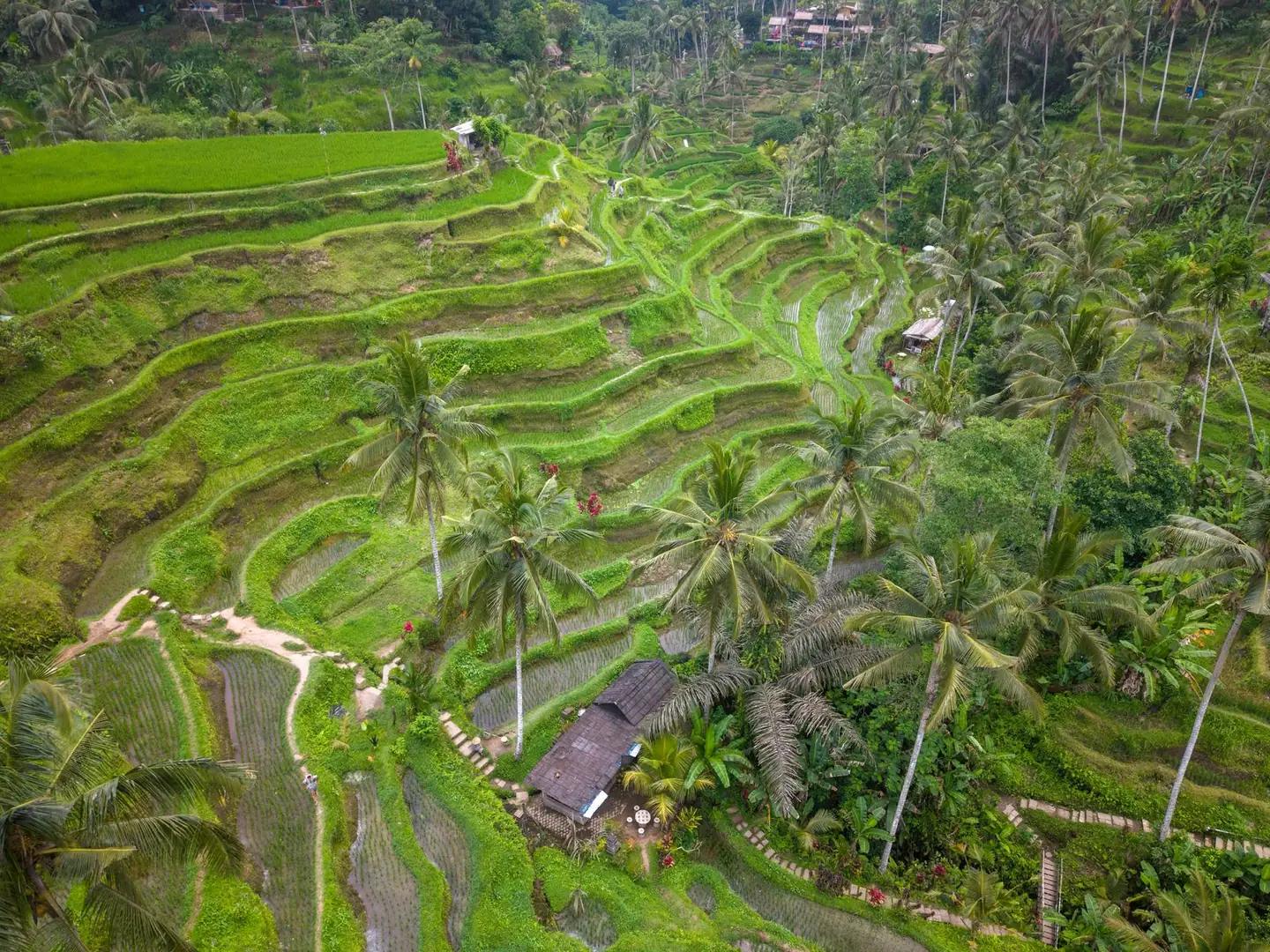
Outdoors · Tegallalang Rice Terraces, Ubud
Outdoors · Campuhan Ridge Walk, Ubud
The Tegenungan Waterfall is a short drive from town, and a popular swimming spot.
ChapterTemples and customs
Bali's religion is Hinduism, and it shapes everyday life. Small offerings of flowers, rice and incense, called canang sari, are placed on pavements and doorways each morning, so watch where you step. At temples, a sarong and sash are required, and many places supply them for a small donation. Women who are menstruating are traditionally asked not to enter temples. Follow signs, keep your voice low and do not climb on shrines or sit higher than priests and offerings.
Tirta Empul, a temple built around holy springs, is where people take part in a ritual purification. If you wish to take part, follow the guidance of local attendants, and treat it as the sacred act it is, not as a photo opportunity. Goa Gajah, the Elephant Cave, and Gunung Kawi, a set of shrines carved into a cliff, are other fascinating historical sites.
ChapterDance and music
Balinese dance is a living art, and Ubud is a good place to see it. Legong is delicate and graceful, the Barong dance tells a story of good against evil, and the kecak, a chant with no instruments, is dramatic. Several venues in Ubud host performances most evenings, and tickets are sold at the door or in advance.
ChapterMonkey forest
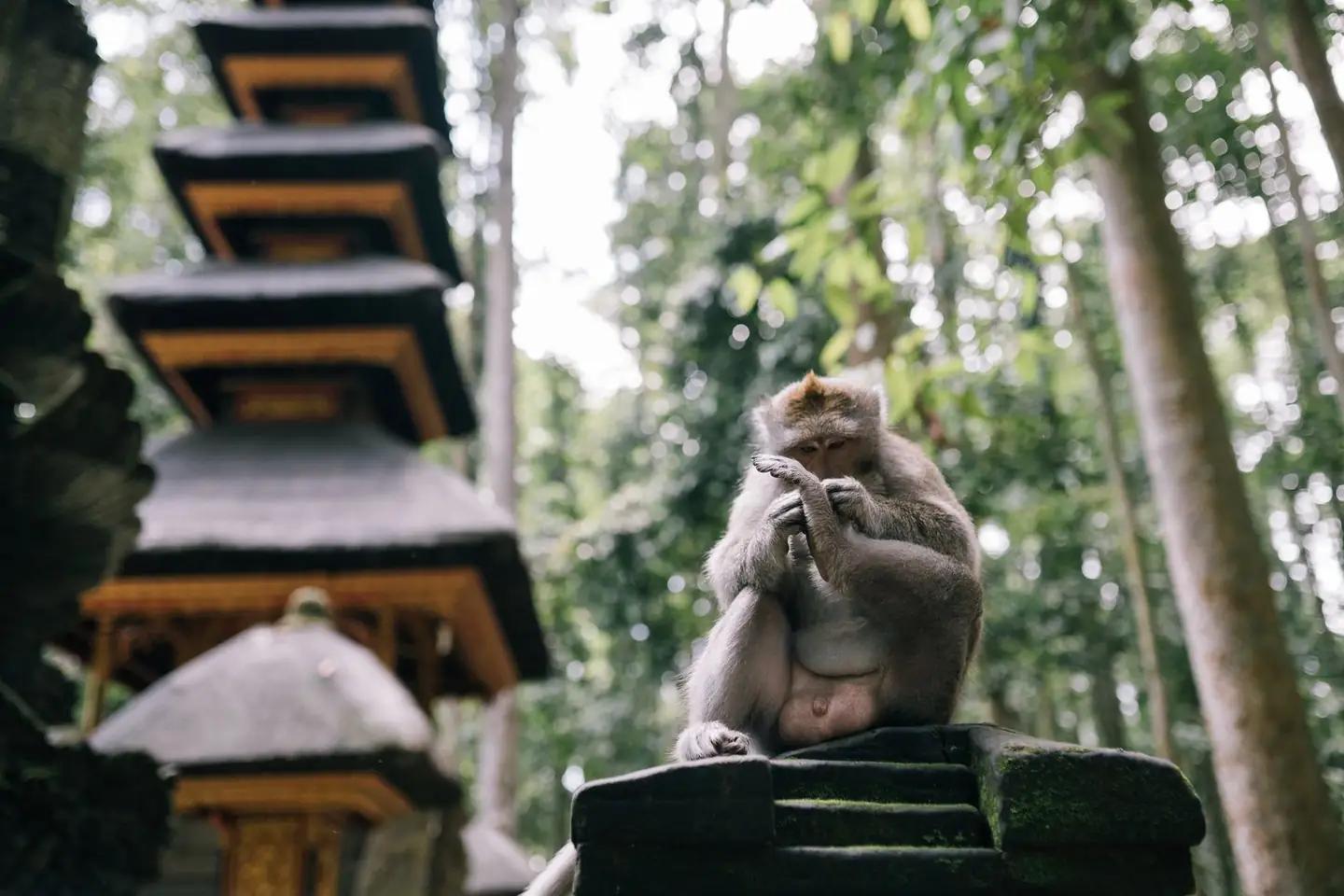
The Sacred Monkey Forest Sanctuary is a forested temple complex with hundreds of macaques. The monkeys are used to people and may snatch food, sunglasses and phones. Keep loose items out of sight, do not carry food openly, and never look them in the eye or touch them.
ChapterWhat to eat
Babi guling, spit-roasted suckling pig, is the island's celebrated dish, and warungs, small local restaurants, serve it with rice and sides. Nasi campur, rice with a variety of small dishes, and bebek betutu, slow-cooked spiced duck, are other local favorites. Ubud also has a thriving vegetarian and health-food scene, with many cafés serving smoothie bowls and plant-based dishes. Balinese coffee is rich and often ground fine, and be wary of luwak coffee, which is often produced with caged civets.
A cooking class that includes a market visit is a great way to learn about Balinese flavors.
ChapterBeyond Ubud
Mount Batur at sunrise is a popular guided trek, starting very early. The Sidemen valley is a calmer, rural area with rice terraces and weaving villages. Ubud is also a good base for exploring the temples and coast of the island.
ChapterGetting around
The town is walkable, but heat and traffic make longer distances harder. Hiring a driver for a day is affordable and convenient. Renting a scooter is common, but accidents are frequent, so only do so if you are an experienced rider with the right license and insurance.
ChapterWhen to go
The dry season, from April to October, is the most popular, and July and August are the busiest. The wet season, from November to March, brings lush landscapes and fewer visitors, with afternoon rain showers. Nyepi, the Day of Silence in March, closes the entire island for a day, including the airport, so plan around it.
Check current details: Indonesia Travel.