Seville is a city of strong feeling. Its palaces glow, its patios smell of jasmine and orange blossom, its flamenco is raw rather than polished, and its summers are fierce. The visit that works is the one that follows the local rhythm: early mornings for sights, long lunches and rest in the heat, and a late evening in the streets and bars.
ChapterThe big monuments, early
The cathedral, one of the largest Gothic cathedrals in the world, houses the tomb of Christopher Columbus, and its bell tower, the Giralda, is a former minaret you can climb by ramps rather than stairs for a view over the city. The Real Alcázar, the royal palace, is a superb mix of Moorish and Christian styles, with courtyards, tiled halls and gardens. Book Alcázar tickets ahead through the official channels, and go as early as you can.
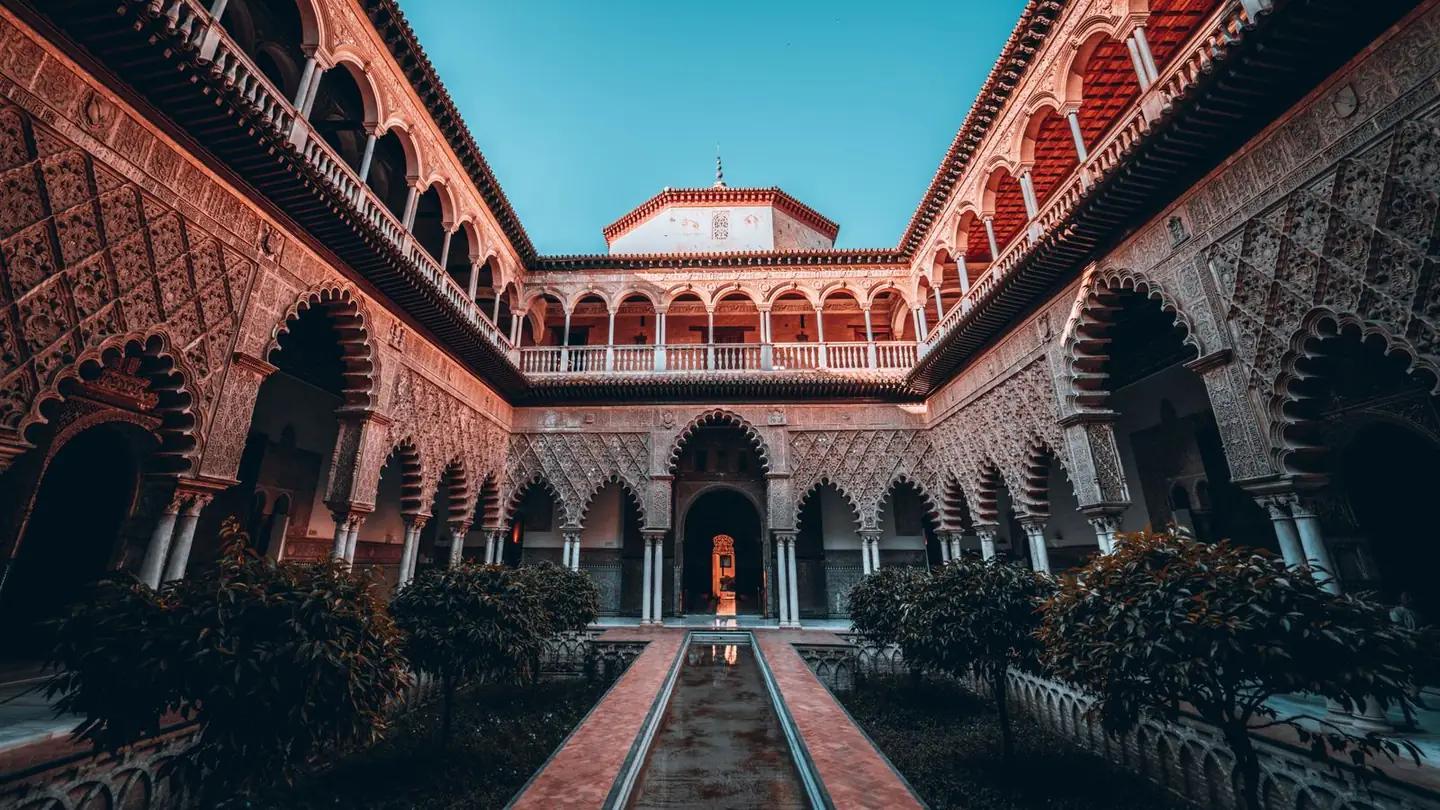
Sightseeing & tours · Real Alcázar, Seville
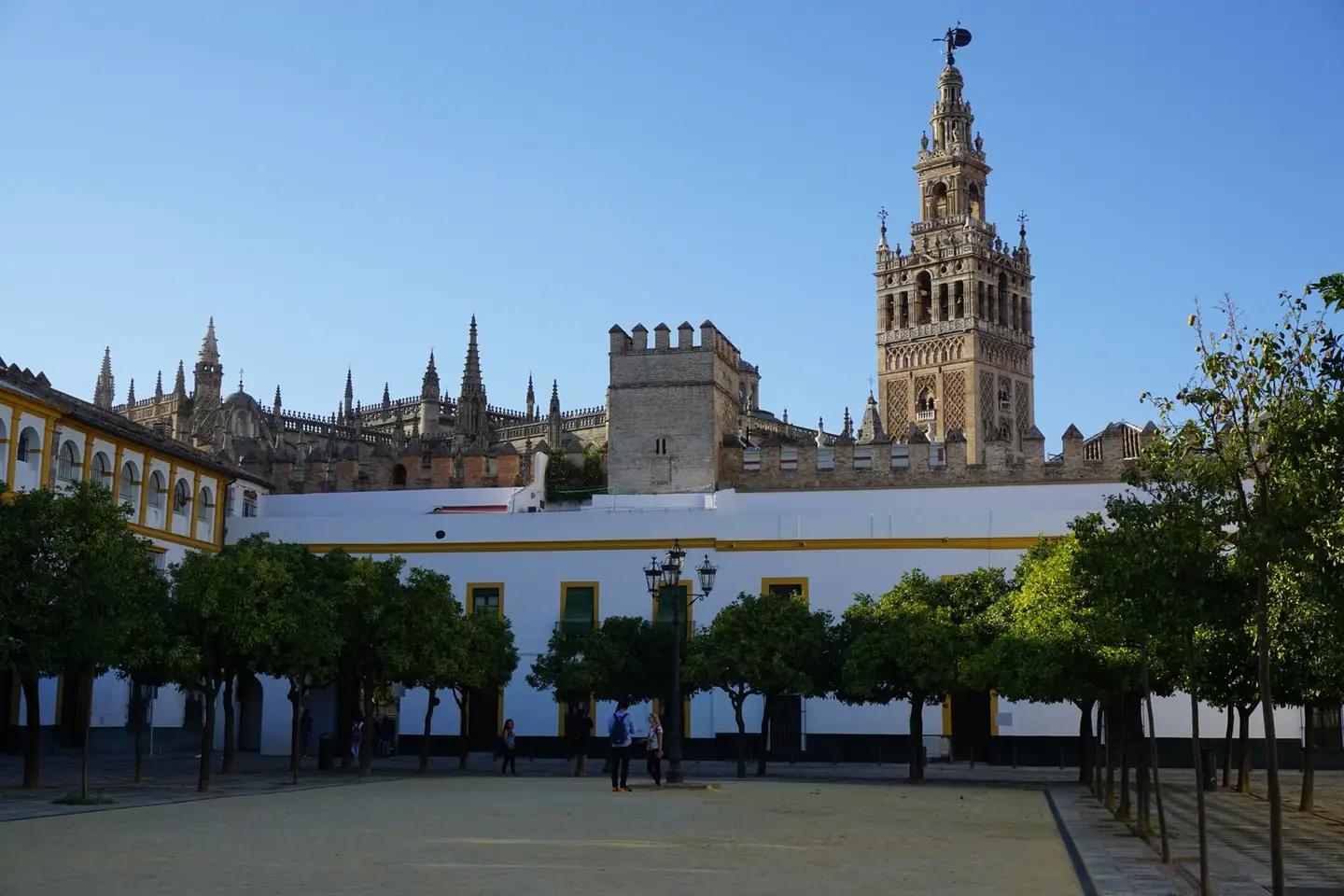
Sightseeing & tours · Seville Cathedral and La Giralda, Seville
Together with the General Archive of the Indies, these form a UNESCO group. A morning is enough for two of them, and the third is best left for another day.
ChapterSanta Cruz, Triana and the river
Barrio Santa Cruz, the old Jewish quarter, is a tangle of whitewashed lanes, small squares and hidden patios. It gets crowded, so go early or in the evening, and look for the quiet corners. Across the Guadalquivir river, Triana has a different spirit: the old pottery and sailors' district, with a market on the river, ceramic workshops and flamenco roots.
Walk the river at dusk. The Torre del Oro, the Triana bridge and the riverside promenade are at their best in the soft evening light.
ChapterPlaza de España and the park
The Plaza de España, with its tiled bridges and semicircular colonnade, is one of the most photographed places in the city, and it sits in the María Luisa Park, a shaded refuge from the heat. Rent a small rowboat on the plaza canal if you like, or walk the park's paths, where fountains and pavilions are scattered among the trees.
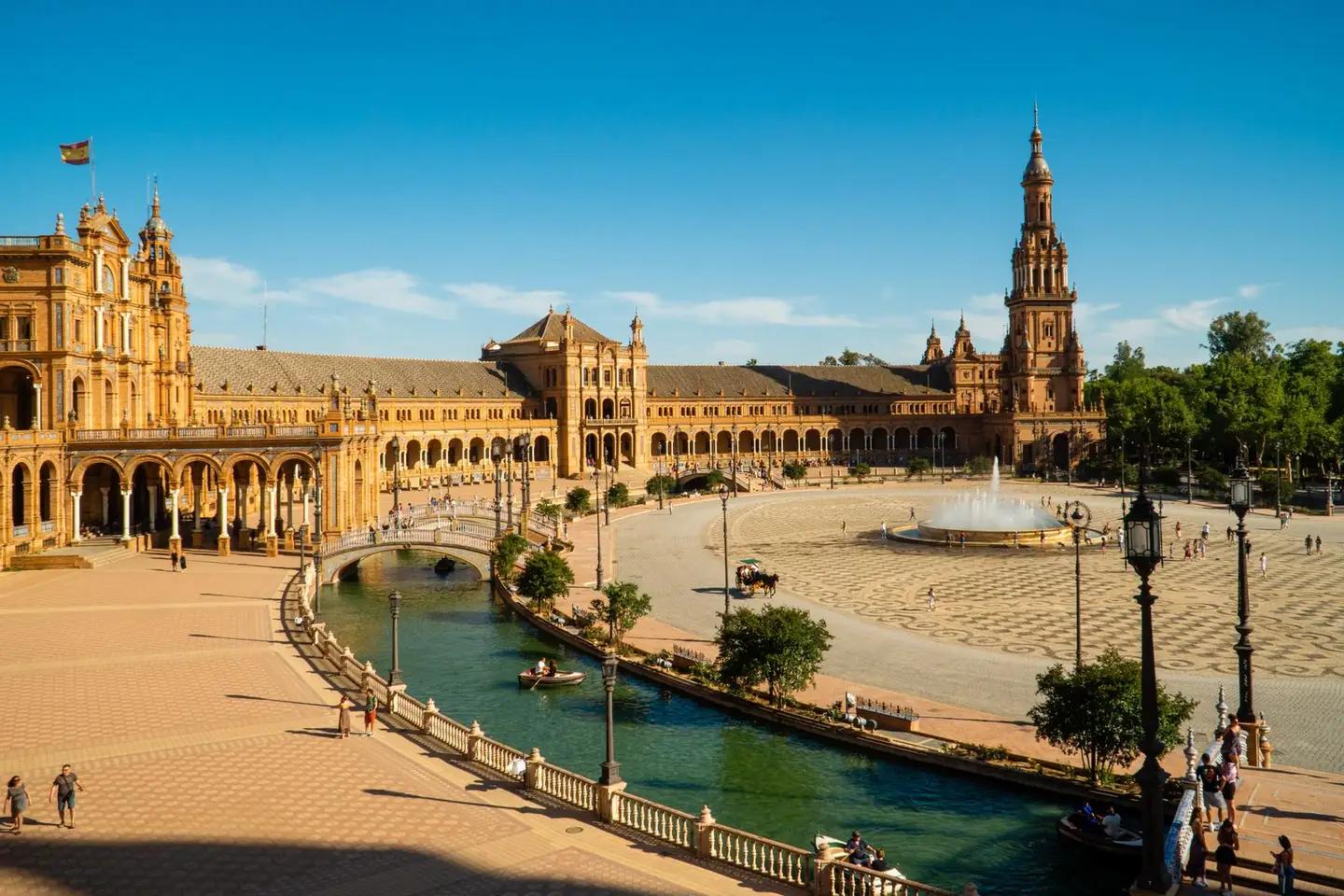
Sightseeing & tours · Plaza de España, Seville
For a modern counterpoint, the Metropol Parasol, a vast wooden structure nicknamed Las Setas, the mushrooms, offers a rooftop walkway with views over the old city.
ChapterFlamenco
Seville is one of the heartlands of flamenco. Tablaos, venues dedicated to performance, offer structured shows, and some are better than others, so read reviews and choose a small, serious venue over a large tourist show. Peñas, flamenco clubs, and small bars sometimes host spontaneous sessions. Sit close, stay quiet and let the performers set the pace.
ChapterEating and drinking
Seville's tapas culture is deep. Look for salmorejo, a thick cold tomato soup similar to gazpacho, espinacas con garbanzos, spinach and chickpeas, jamón ibérico, tortilla española and pringá, a slow-cooked meat sandwich. Eat standing at a counter, order a drink with each plate and move on. Orange trees line the streets, though the fruit is bitter and is used for marmalade.
Sherry, from nearby Jerez, is the regional drink, and a dry fino or manzanilla is an excellent pairing with tapas.
ChapterFestivals
Holy Week, Semana Santa, is a spectacular and solemn spring event, when processions with elaborate floats cross the city. The April Fair, Feria de Abril, follows with tents, dancing and horses. Both are extraordinary, but crowded and expensive, so book accommodation far in advance, or plan around them if you prefer quiet.
ChapterDay trips
Córdoba, with its Mezquita, is under an hour by fast train. Jerez offers sherry bodegas and horses, Ronda has a dramatic gorge, and Cádiz is a lively coastal city. Roman Itálica, near Seville, is an easy half-day.
ChapterWhen to go
Spring and autumn are the best seasons, with warm days and pleasant evenings. Summer is very hot, with afternoon temperatures that make sightseeing hard, so adopt the local siesta. Winter is mild and quiet.
Check current details: Visit Sevilla.


