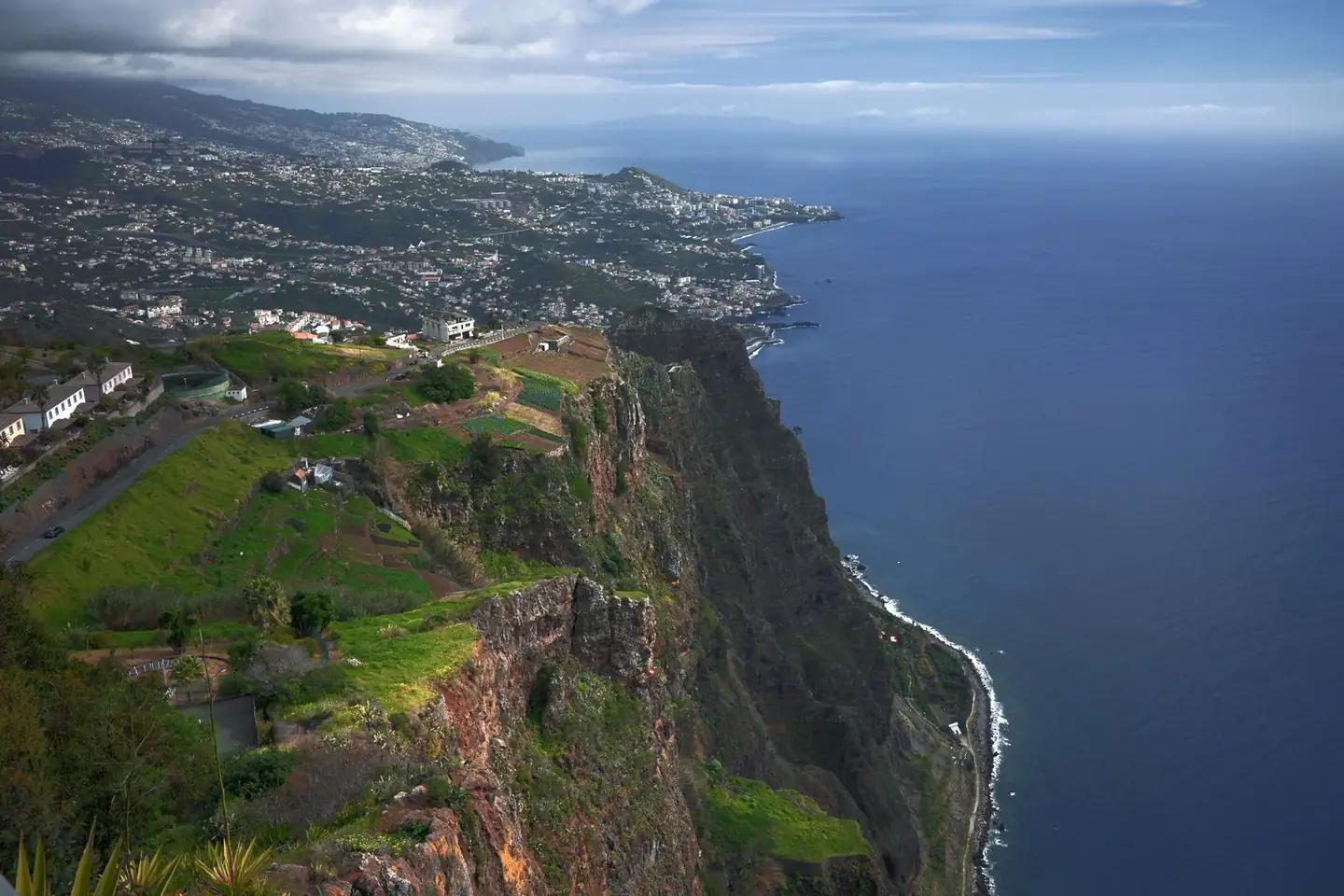
Madeira rises out of the Atlantic like a mountain range with a coastline attached. Everything here is steep: the streets of Funchal, the terraced farms, the cliffs, the walking trails. That steepness is also what makes the island so memorable, with views that appear around every bend and weather that can change between one valley and the next.
ChapterFunchal as a base
Funchal, the capital, is a good place to start and a good base for the island. The Mercado dos Lavradores, the farmers' market, is a feast of tropical fruit, flowers and fresh fish, and the old town, the Zona Velha, has painted doors and small restaurants. A cable car climbs to Monte, where you can visit the Monte Palace tropical garden and the church, and descend, if you dare, by the traditional wicker toboggan.
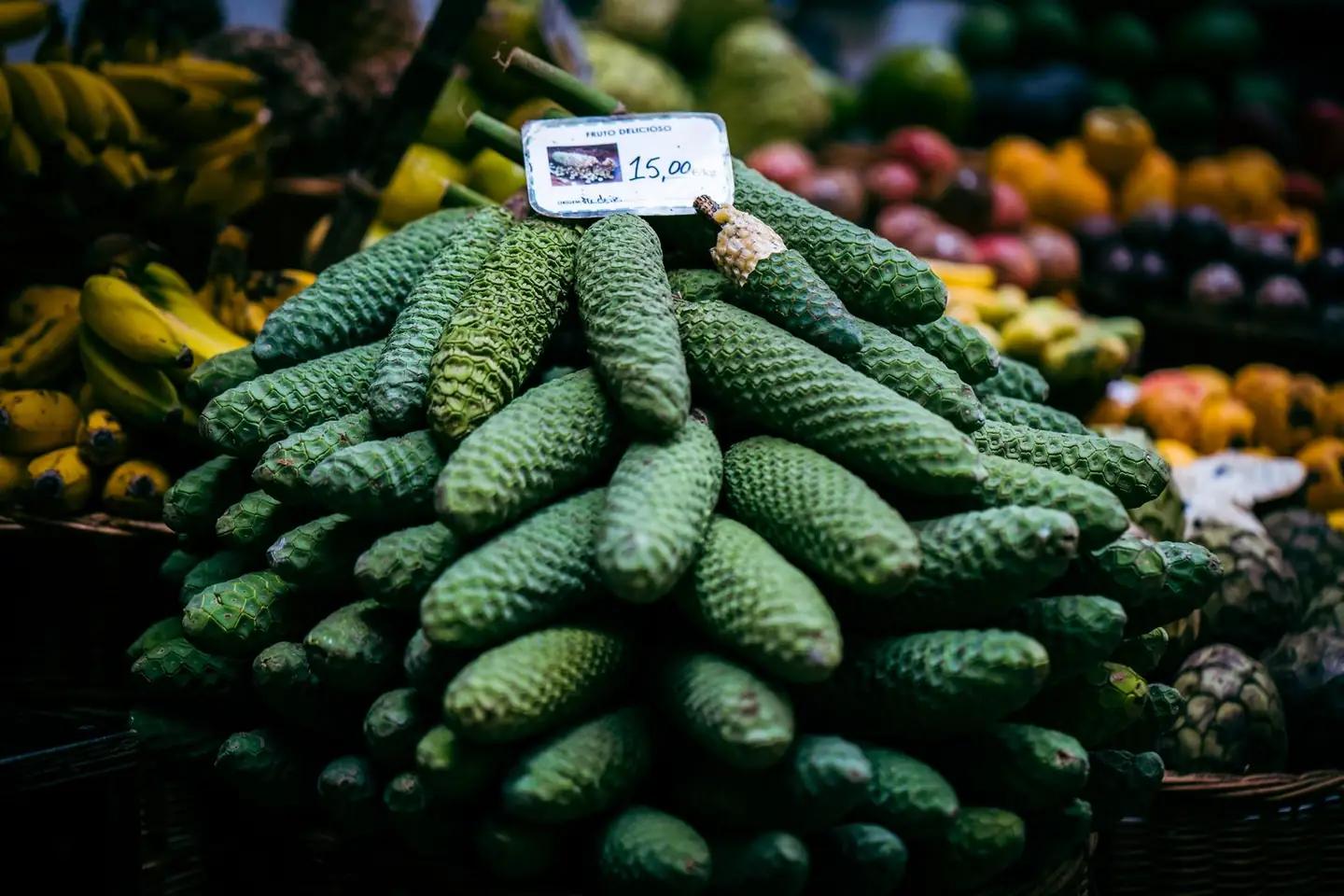
Shopping · Mercado dos Lavradores, Madeira
Spend a day or two in the capital, then spread out. The island is small, but its roads are winding, so distances take longer than the map suggests.
ChapterThe levadas
Madeira's levadas are irrigation channels, built over centuries to carry water from the wet north and mountains to the drier south. Along many of them run narrow paths that now form one of the great walking networks in Europe. Routes range from gentle strolls beside the water to demanding mountain hikes with sheer drops.
Choose with care. Check trail conditions and any closures before you set out, since rockfalls and past wildfires have affected some routes. Some levada walks pass through dark tunnels, so bring a headlamp. Go with a guide if you are unsure. Good choices for varied scenery include the Caldeirão Verde and the 25 Fontes routes, though they are popular, so start early.
ChapterThe high mountains
The walk from Pico do Arieiro to Pico Ruivo, the island's highest peaks, is spectacular and demanding, with steps, exposed sections and tunnels. Go only in good weather, with proper footwear and attention to the forecast. Many visitors enjoy the views from Pico do Arieiro's viewpoint without doing the full walk.
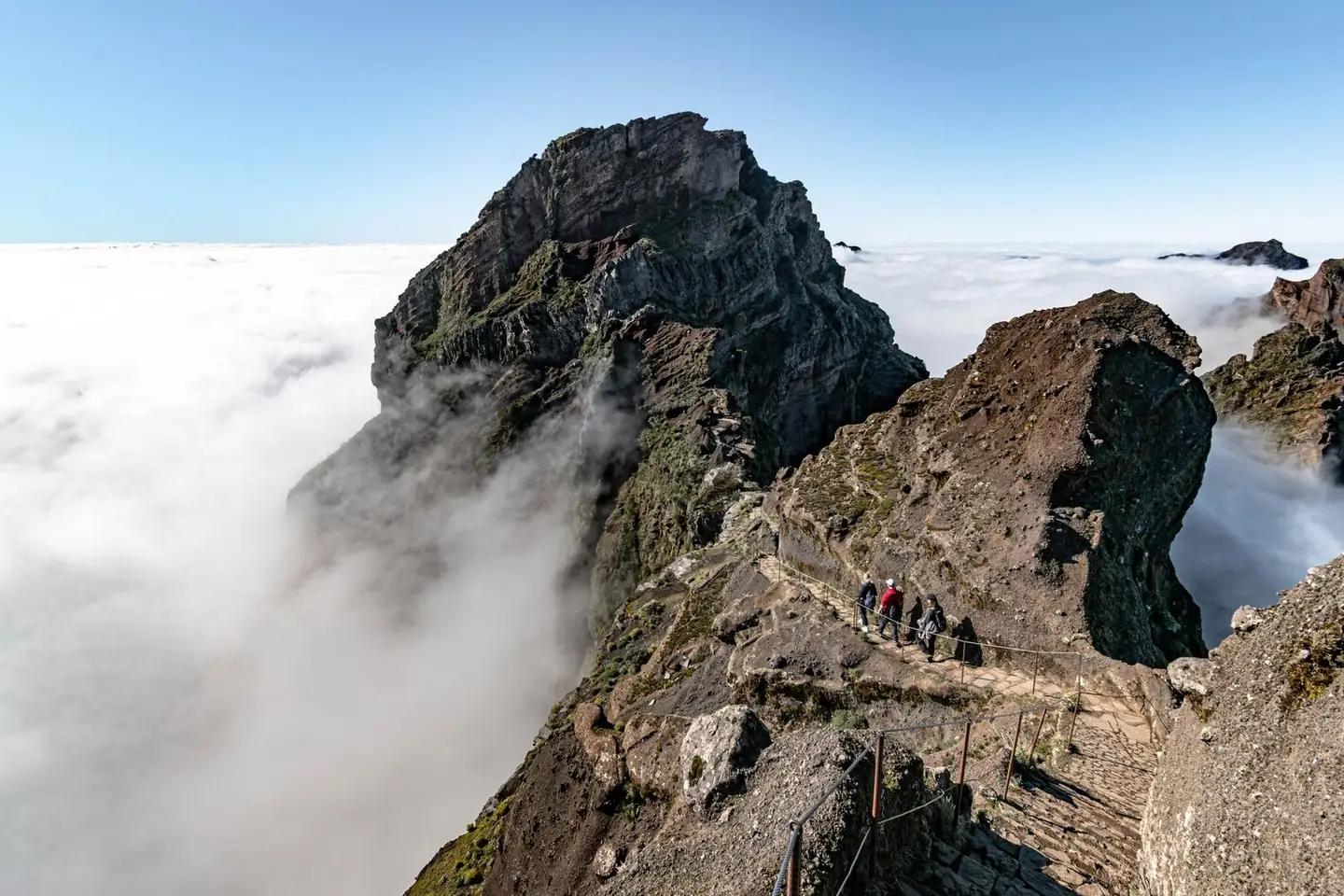
Outdoors · Pico do Arieiro, Madeira
ChapterCoast and cliffs
Cabo Girão, one of Europe's highest sea cliffs, has a glass-floored skywalk. In the north-west, Porto Moniz has natural lava pools for swimming, and the Seixal coast is lush and dramatic. The east, around Ponta de São Lourenço, is drier and wilder, with a coastal walk across a barren peninsula. Santana is known for its traditional triangular houses.
ChapterWhat to eat and drink
Espetada, beef skewered on a bay laurel stick and grilled over fire, is a Madeiran classic. Fresh fish, such as espada, the black scabbardfish, often served with banana, is a local specialty, and bolo do caco, a round bread cooked on a stone, comes with garlic butter. Poncha, a rum-based drink with honey and citrus, is the island's cocktail, and Madeira wine, fortified and long-lived, is the famous export. A visit to a wine lodge in Funchal is a pleasant afternoon.
ChapterDriving and getting around
Roads are steep, narrow and often wrapped in cloud. If you drive, take it slowly, and consider whether a guided excursion would be more relaxing. Buses cover many routes, though less frequently in rural areas.
ChapterWhen to go
Madeira's mild climate makes it a year-round destination. Spring brings flowers, and the Flower Festival fills Funchal with color. Summer is warm and busier, and autumn is gentler. New Year's Eve is famous for its fireworks over the bay, with big crowds and early booking required.
Check current details: Visit Madeira.