Oaxaca is the kind of city that gets under your skin. Colonial streets in warm colors, courtyards full of bougainvillea, mountains on every side and a food culture so deep that it is the main reason many people come. It rewards a slow trip: a few days in town for markets and meals, and a few more in the valley for ruins, weavers and mezcal.
KapitelWalk the center
The historic center is compact and walkable, centered on the Zócalo, a shaded plaza ringed with cafés, and the adjacent Alameda. The Church of Santo Domingo de Guzmán, with its gilded baroque interior, is the most spectacular building, and the former convent next to it houses the Museum of the Cultures of Oaxaca, a superb introduction to the region's history. Beside it, the Ethnobotanical Garden, visited by guided tour, is a work of art among desert plants.
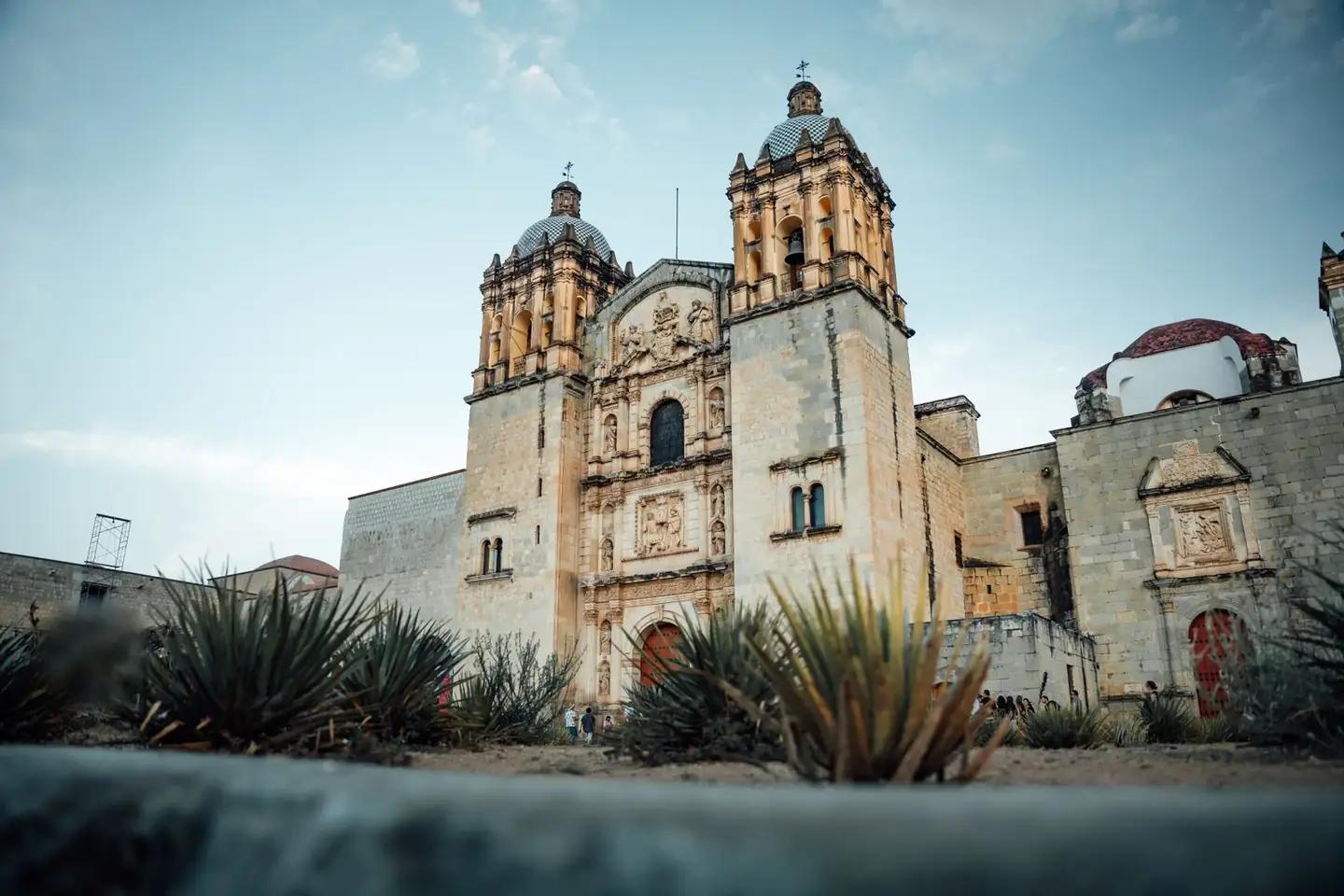
Kunst & Kultur · Templo de Santo Domingo de Guzmán, Oaxaca
Calle Macedonio Alcalá, the pedestrian street, links the main sights. Side streets hold galleries, textile shops and quiet courtyards.
KapitelThe markets
Markets are the heart of Oaxacan life. The Benito Juárez and 20 de Noviembre markets are closest to the center, and the latter has a famous smoke-filled passage where you choose raw meat, which is grilled for you on charcoal and eaten with tortillas, salsas and grilled onions. Be hungry and be adventurous. The Mercado de la Merced and the Sánchez Pascuas market are smaller, calmer alternatives.
KapitelWhat to eat and drink
Oaxaca is famous for its seven moles, complex sauces of chiles, spices and chocolate, with mole negro the best known. Tlayudas, giant crisp tortillas topped with beans, cheese and meat, are the street food classic. Quesillo, stringy Oaxacan cheese, appears everywhere, as do memelas, thick tortillas, and tamales wrapped in banana leaves. Chapulines, toasted grasshoppers seasoned with lime and chili, are a traditional snack worth trying.
Hot chocolate, ground with cinnamon and almonds, and tejate, a cold, frothy drink of corn and cacao, are the local drinks, and mezcal is the region's spirit. Visit a mezcalería, learn the difference between the types and sip rather than shoot it.
KapitelThe valley
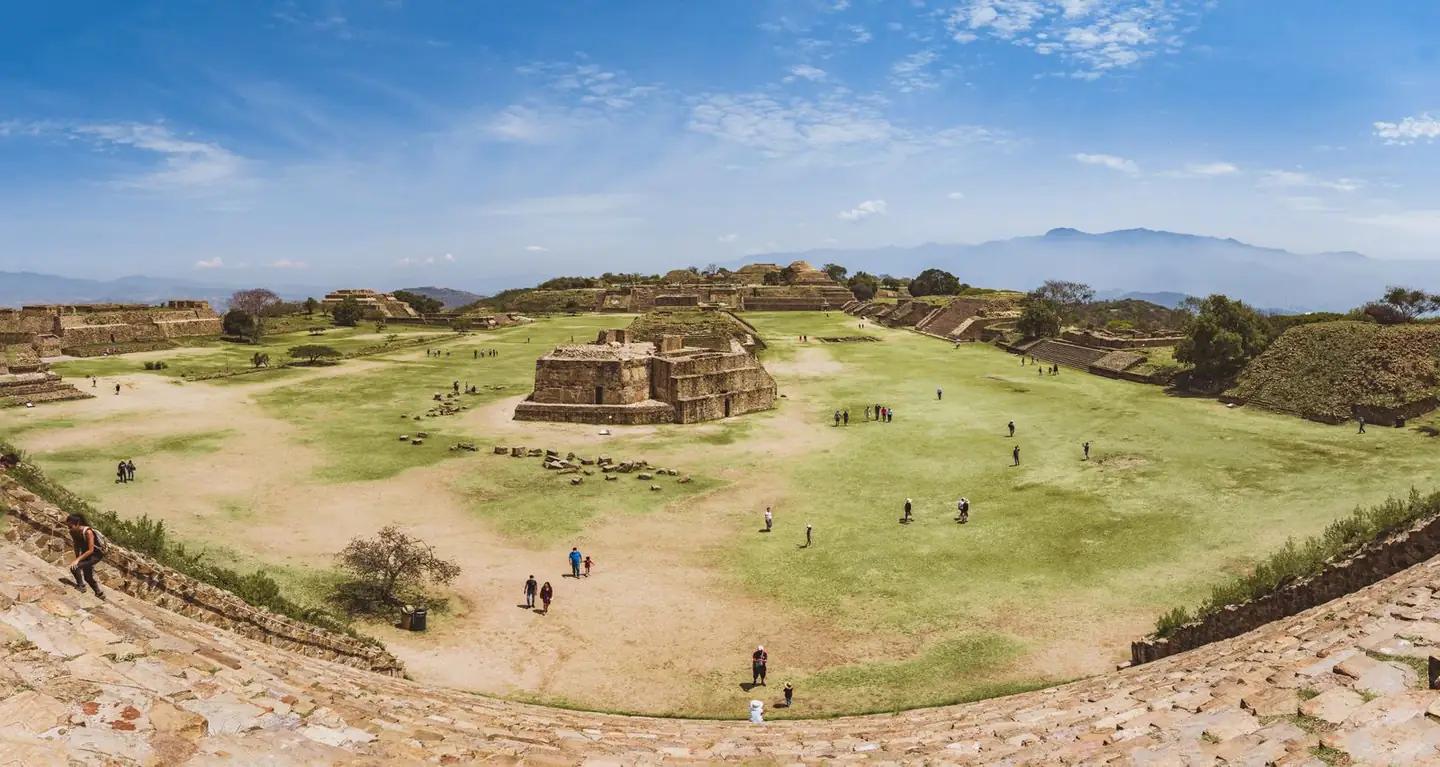
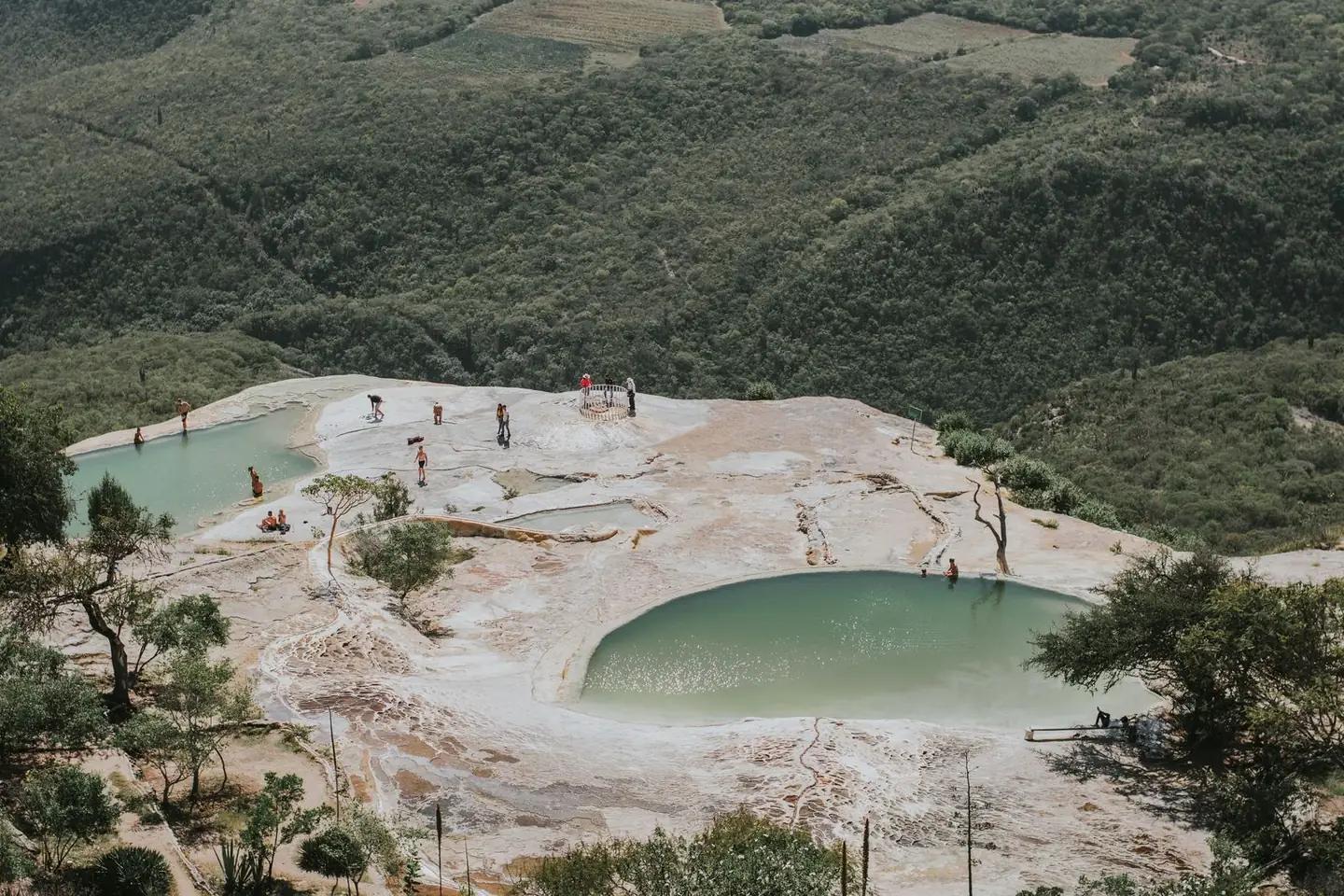
Monte Albán, a Zapotec city on a hilltop just outside town, has pyramids, plazas and wide views, and is best in the morning. Mitla is known for its stone mosaic fretwork, and Hierve el Agua is a set of petrified waterfalls and natural pools on a clifftop.
Many villages specialize in crafts. Teotitlán del Valle is known for woven rugs colored with natural dyes, including cochineal, made from insects, and a visit to a weaving family helps you understand the work. San Bartolo Coyotepec makes black clay pottery, and San Martín Tilcajete is the home of alebrijes, colorful carved wooden animals. Santiago Matatlán, called the mezcal capital, offers tours of small distilleries. The huge, ancient Tule tree is a short stop on the way.
Many of these places are easiest to visit with a driver or a small group tour.
KapitelFestivals
Oaxaca's calendar is rich. The Guelaguetza, in July, brings dances and costumes from across the state. The Day of the Dead, around October 31 to November 2, is deeply moving, with decorated altars, candlelit cemeteries and street processions, but it needs advance booking and respectful behavior. The Night of the Radishes, on December 23, features elaborate sculptures carved from radishes.
KapitelPractical notes
Oaxaca sits at about 1,550 meters, with a mild climate, and the altitude rarely troubles visitors. Drink bottled water and eat at busy places. Occasionally, road blockades or protests disrupt travel in the region, so check conditions before long trips. Respect residents and ask before photographing people, particularly in markets and ceremonies.
KapitelWhen to go
The dry season, from November to April, is the most comfortable, with warm days and cool nights. The rainy season, from June to September, usually brings afternoon showers and greener hills. Festival dates are the busiest, so book early if you plan to visit then.
Check current details: Visit Mexico.