Melbourne is a city of small discoveries. A staircase leading to a hidden bar, a laneway of street art, a café with queues out the door at eight in the morning. It takes pride in coffee, in sport, in art and in knowing the best places before anyone else, and it rewards visitors who walk without a plan.
KapitelThe laneways and the center
The grid of the central business district hides a network of laneways, narrow passages filled with cafés, bars and street art. Hosier Lane is the most famous for its ever-changing murals, and Degraves Street and Centre Place are lined with small cafés. Explore without a route. The best finds are behind unmarked doors and up stairs.
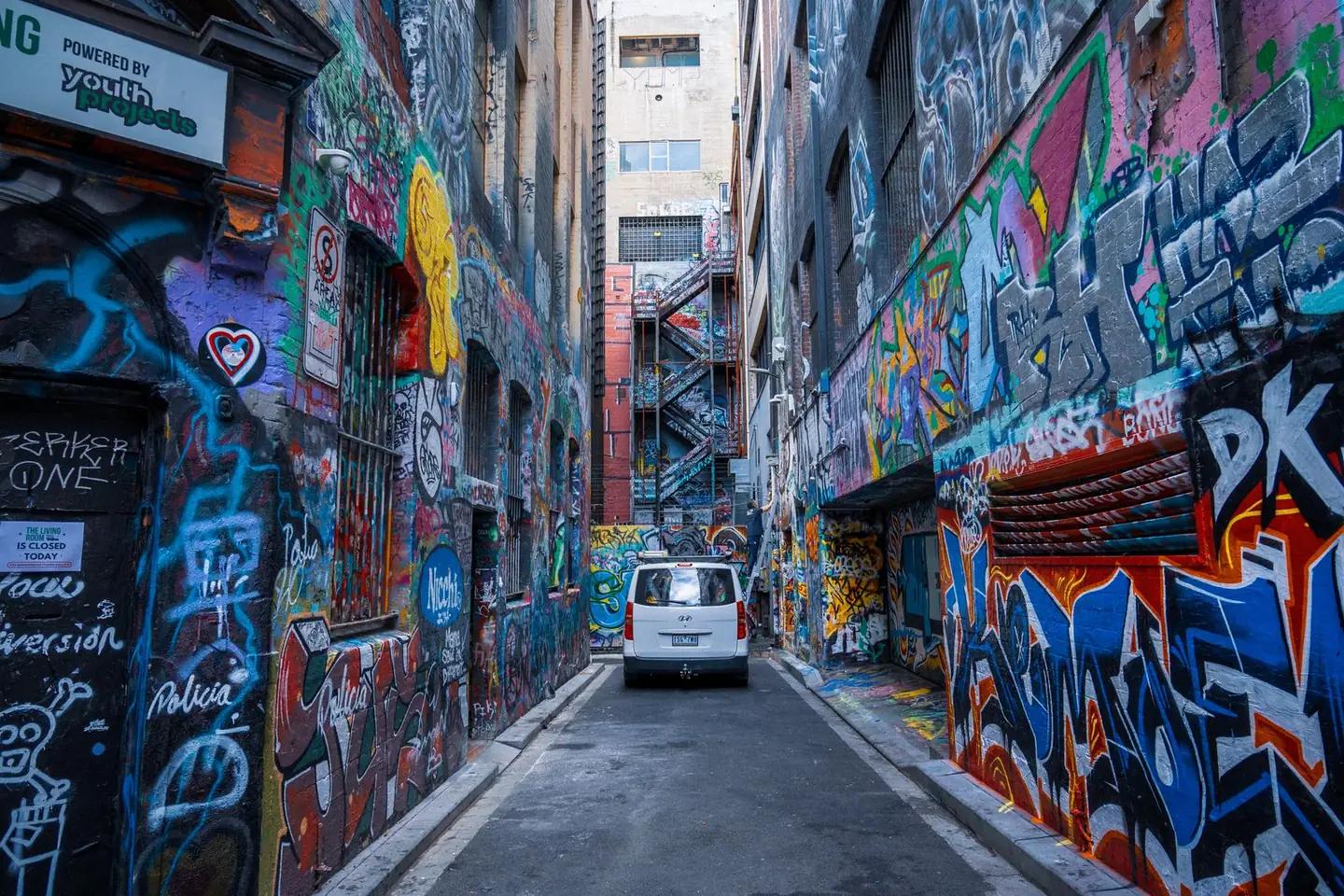
Sehenswürdigkeiten & Touren · Hosier Lane, Melbourne
Flinders Street Station, with its yellow facade and clocks, is the symbol of the city, and across the road, Federation Square is a public gathering place. The State Library of Victoria has a stunning domed reading room, free to visit. The National Gallery of Victoria is Australia's oldest and finest art museum, with free entry to its permanent collection.
KapitelTrams and getting around
The tram network is one of the largest in the world and the best way to get around. The City Circle tram loops around the center and is a good introduction. Buy or load a myki card to travel. Walking is easy in the flat center, and many neighborhoods are reachable by tram.
KapitelNeighborhoods
Fitzroy, with Brunswick and Gertrude Streets, is a creative quarter of vintage shops, bars and cafés. Collingwood next door has galleries and a young crowd. Carlton, with Lygon Street, is the Italian quarter, and has the beautiful Carlton Gardens and the UNESCO-listed Royal Exhibition Building. Richmond's Victoria Street is a hub of Vietnamese restaurants.
St Kilda is Melbourne's seaside, with a pier, a beach, the old Luna Park and cafés. At dusk, little penguins come ashore on the breakwater, and you can watch them from a distance. Southbank, along the Yarra River, has restaurants, galleries and the Arts Centre.
KapitelCoffee and food
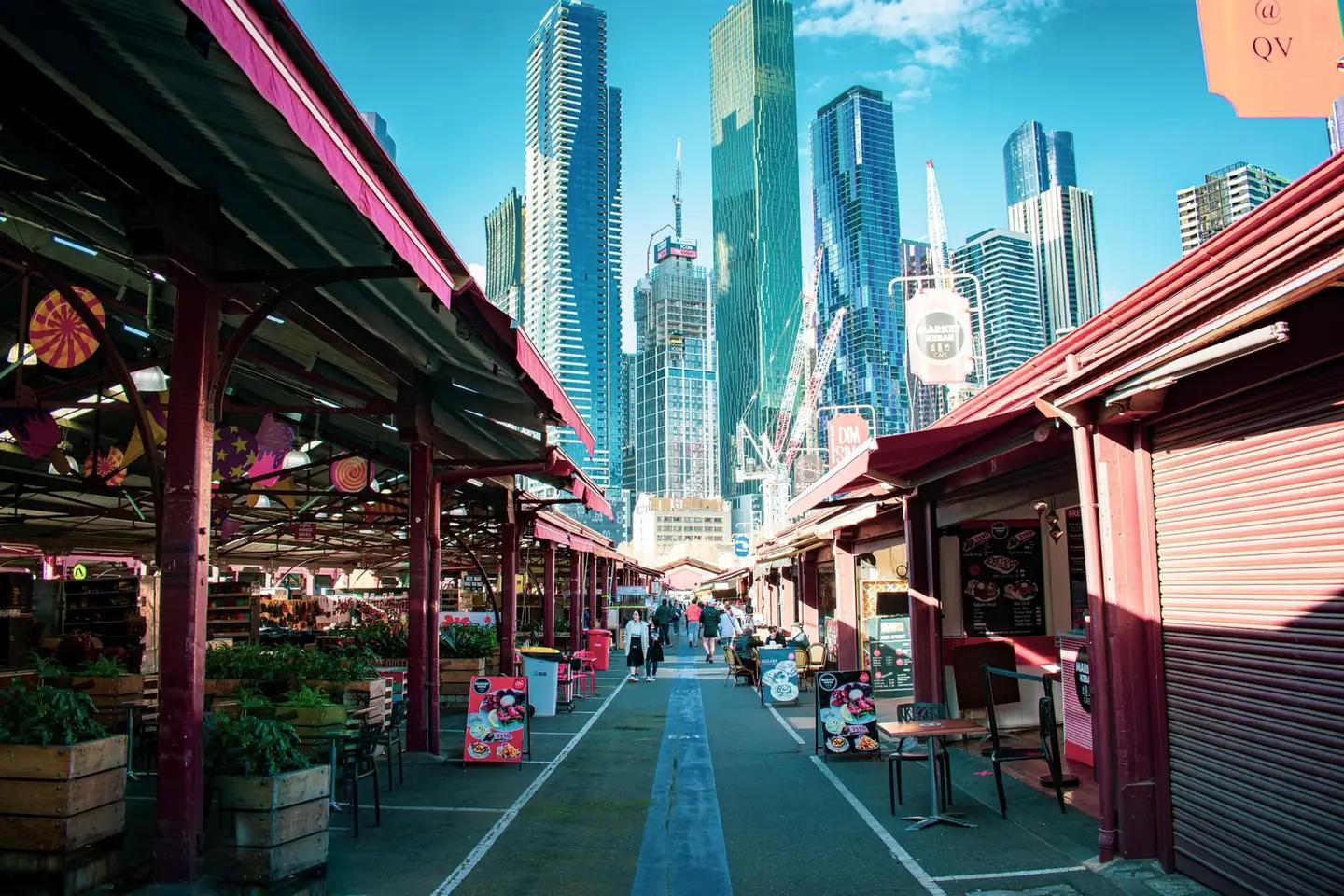
Melbourne takes coffee seriously. The espresso culture is intense, and the flat white and the long black are staples, with local roasters on almost every block. Brunch is a ritual, often with creative twists. The city's multicultural population has made it one of the best places in the world to eat Greek, Italian, Vietnamese and Chinese food. Little Bourke Street's Chinatown is known for dumplings, and Footscray and Richmond are known for Vietnamese, with excellent pho and banh mi. The Queen Victoria Market is a vast open-air market for produce and street food, though it closes on some days, so check.
KapitelSport and events
Melbourne loves sport. The Melbourne Cricket Ground, one of the largest stadiums in the world, hosts cricket in summer and Australian rules football in winter, and the stadium tour includes a sports museum. Seeing a match is an unforgettable cultural experience. Big events include the Australian Open tennis in January, the Formula 1 Grand Prix in March, the AFL Grand Final in September and the Melbourne Cup horse race in November. The Comedy Festival fills March and April.
KapitelDay trips
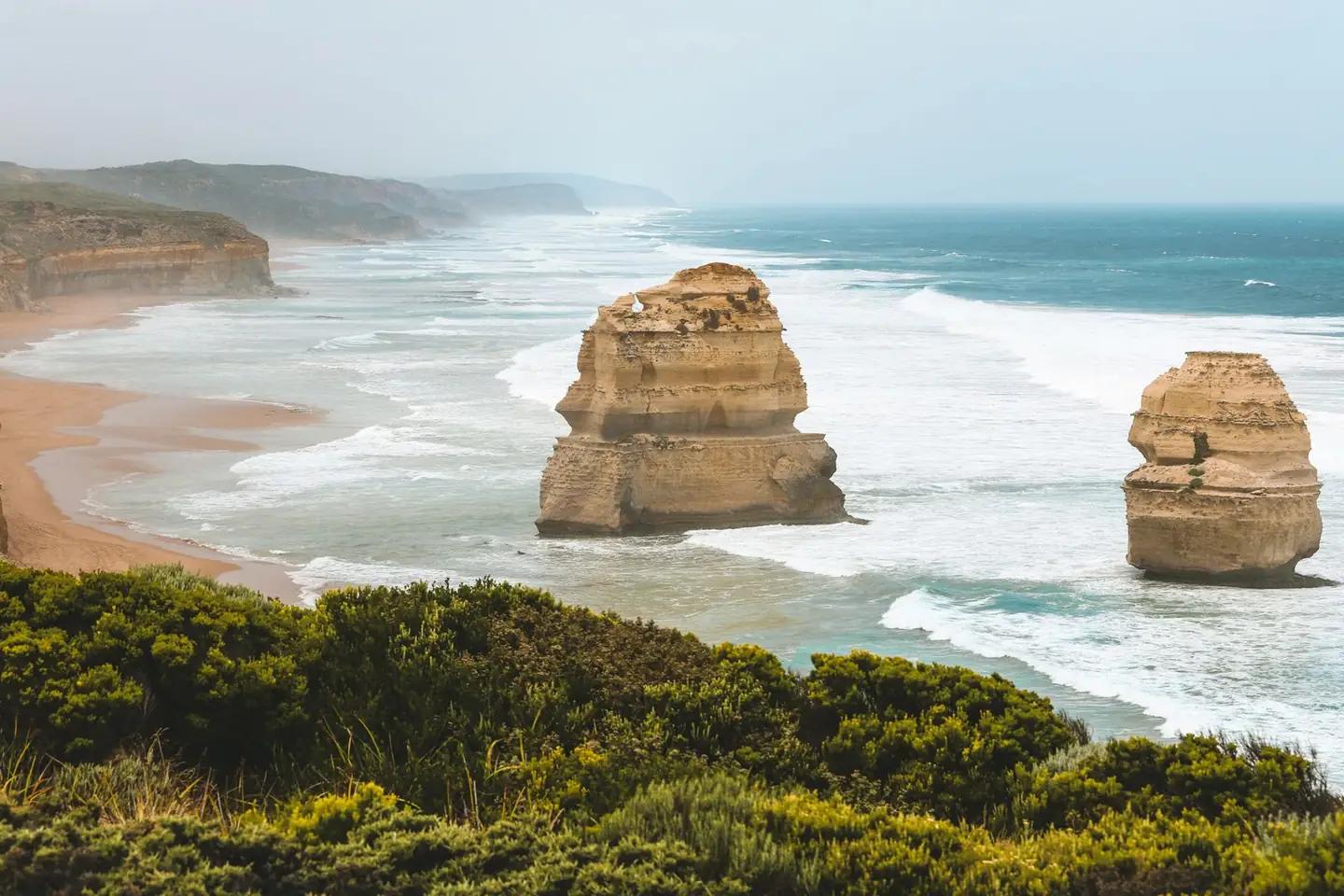
The Great Ocean Road, one of the world's great coastal drives, passes the Twelve Apostles rock formations, but it is long, so consider an overnight stay or a tour. Phillip Island, about two hours away, has the Penguin Parade at dusk. The Mornington Peninsula has beaches, hot springs and wineries, and the Yarra Valley is a wine region close to the city. The Dandenong Ranges offer forest walks and the Puffing Billy steam train.
If you drive, remember that Australians drive on the left, and take breaks on long routes, as fatigue is a major risk.
KapitelWhen to go
Melbourne is famous for four seasons in one day, so always carry layers. Spring and autumn are the most pleasant, with mild weather and many events. Summer is warm and sometimes very hot, with long evenings. Winter is cool and gray but is the season for football and cozy bars.
Check current details: Visit Melbourne.