Jaipur is where many first-time visitors to India meet Rajasthan: hilltop forts, ornate palaces, bazaars bursting with color and a city of terracotta pink. It is magnificent, and it is also hot, loud and relentless in its attention to tourists. A little planning, early starts and a sense of humor turn it into one of the great experiences in India.
KapitelThe Pink City
The old city was painted pink in 1876 to welcome the Prince of Wales, and the color stuck. Walk its gated walls and wide streets to see the heart of Jaipur. The City Palace, a complex of courtyards and museums, is still partly the home of the royal family. The nearby Jantar Mantar, an eighteenth-century observatory with giant stone instruments, is a UNESCO World Heritage site, and fascinating if you take a guide.
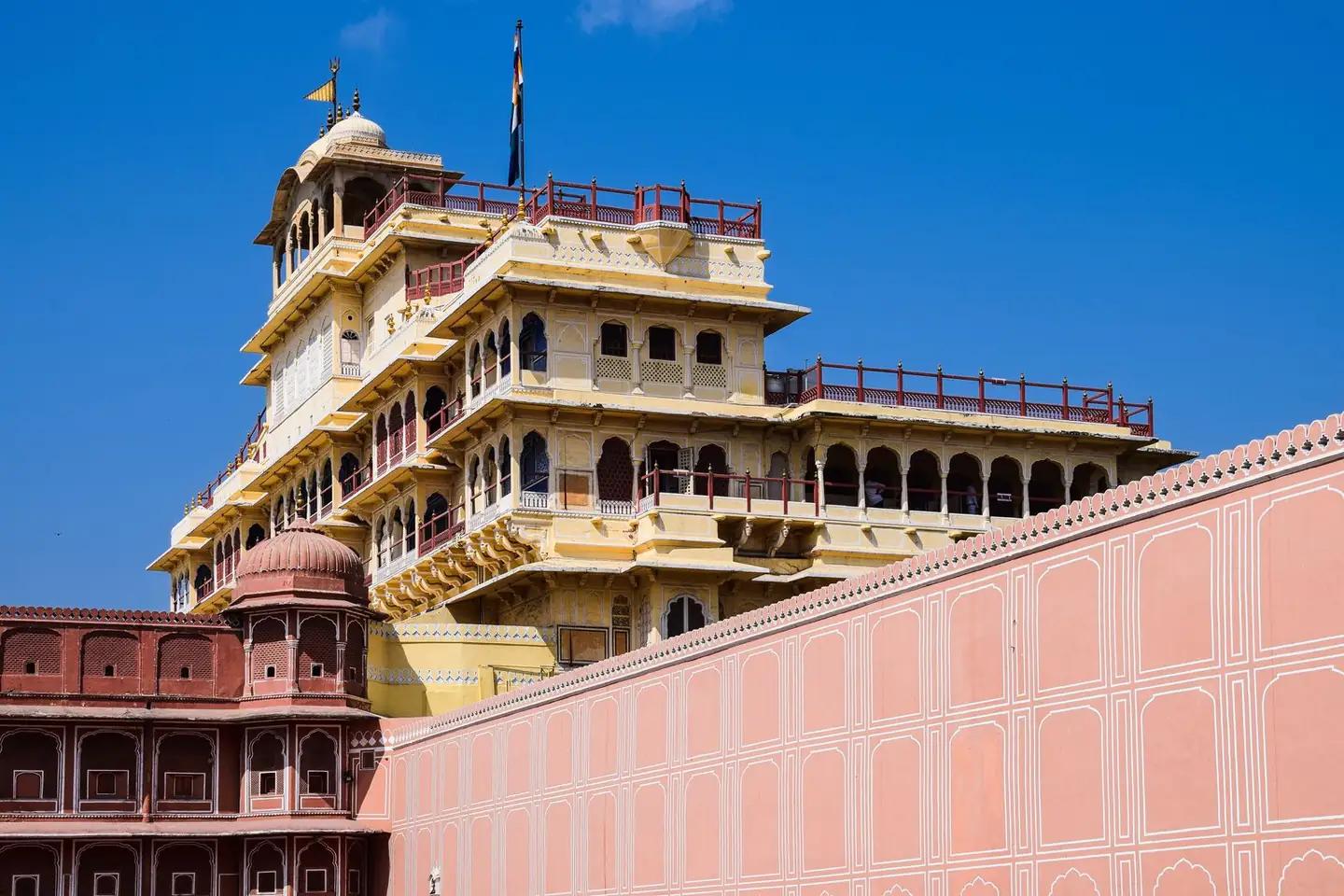
Kunst & Kultur · City Palace, Jaipur
The Hawa Mahal, the Palace of Winds, with its honeycombed pink sandstone facade, is the symbol of the city. It is best photographed in the morning light from a café across the street.
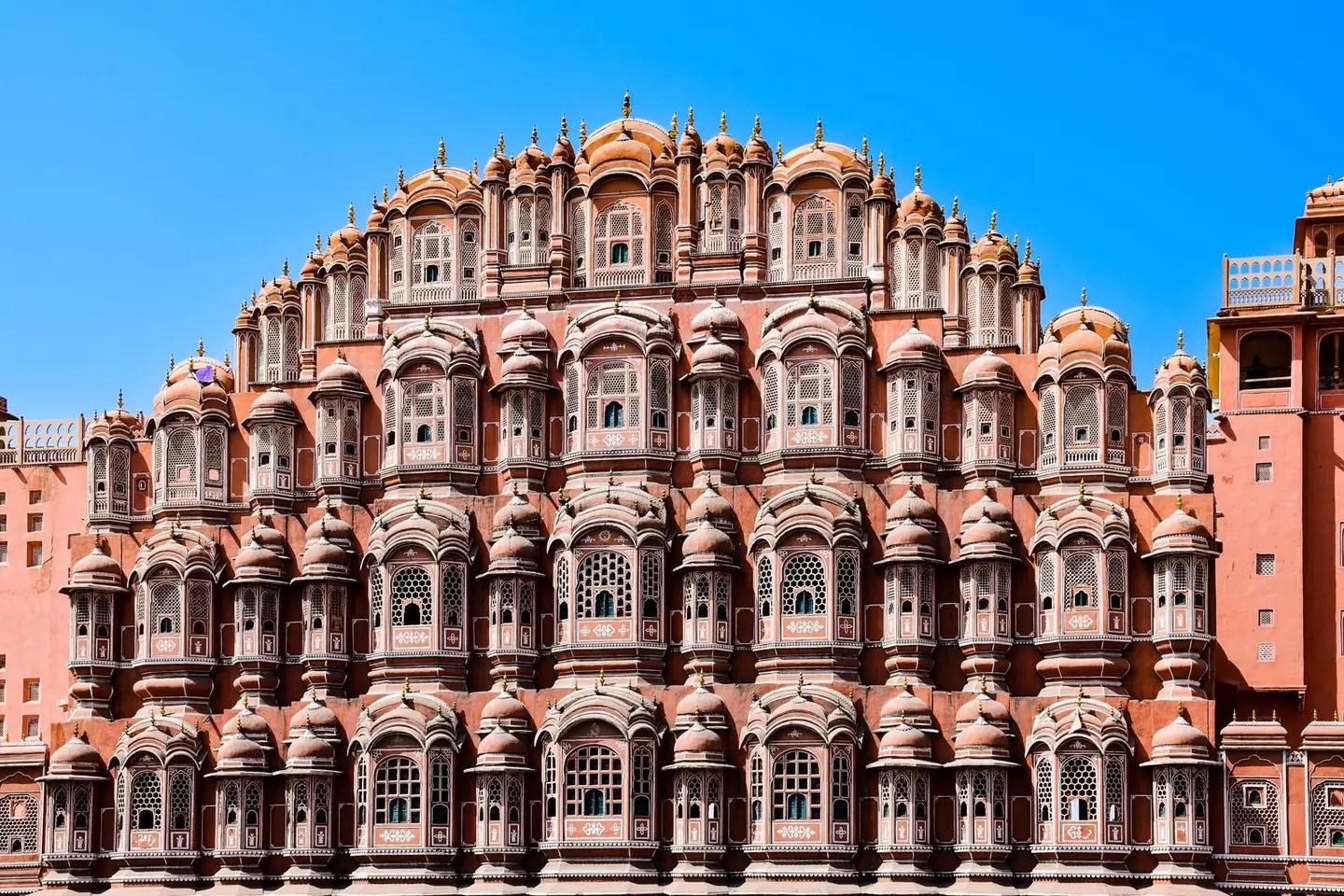
Sehenswürdigkeiten & Touren · Hawa Mahal, Jaipur
KapitelThe forts
Amber Fort, on a hillside outside the city, is the greatest of Jaipur's forts, with mirror-covered halls, courtyards and views of the surrounding hills. Go as soon as it opens to beat the crowds and the heat. Elephant rides to the fort are widely criticized for animal welfare reasons, so we would suggest walking up or taking a jeep.
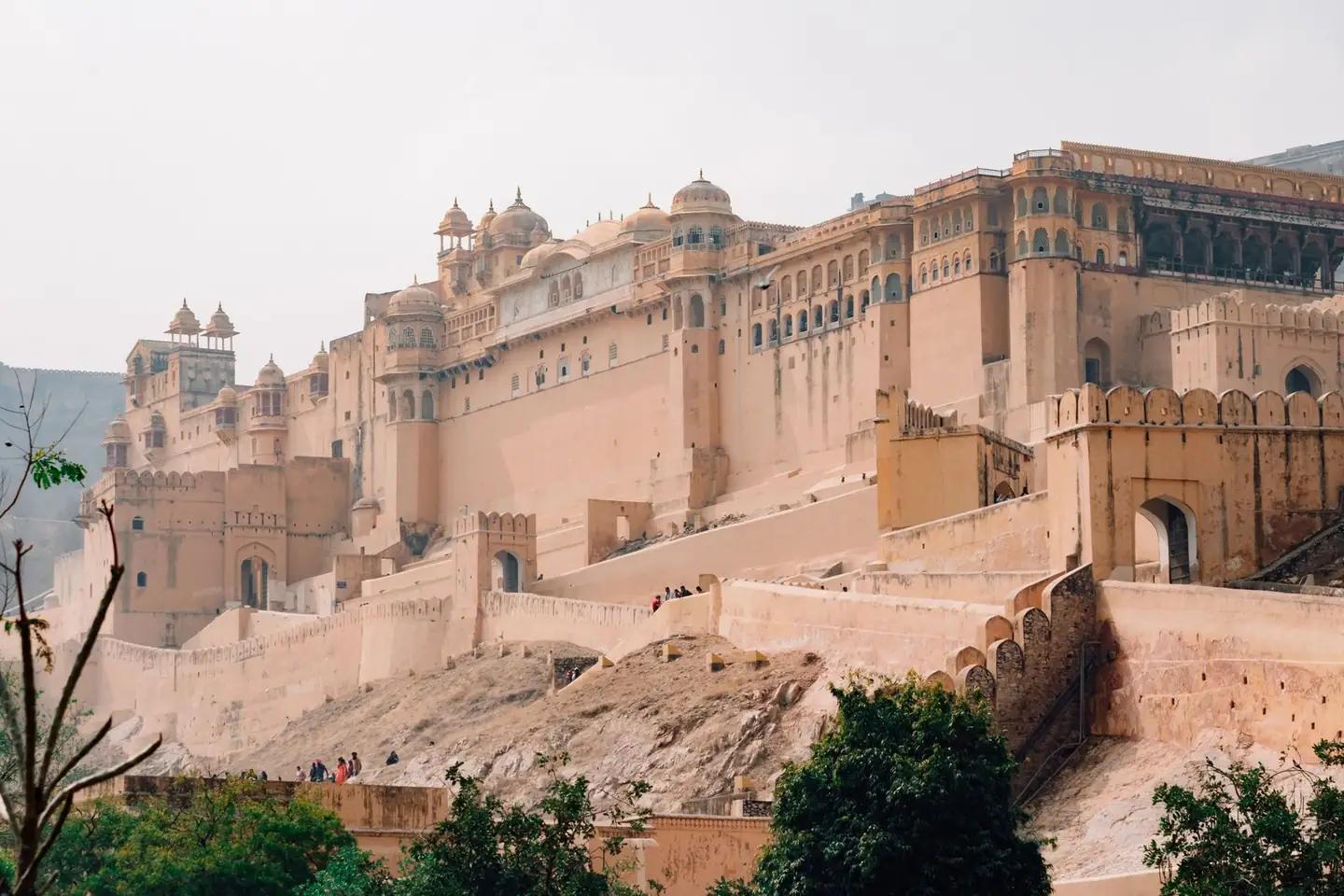
Sehenswürdigkeiten & Touren · Amber Fort, Jaipur
Nahargarh Fort, above the city, is a favorite spot for sunset views, and Jaigarh Fort, nearby, has an enormous cannon. The Jal Mahal, a palace in the middle of a lake, is best seen from the road.
KapitelThe bazaars
Jaipur's bazaars are an experience in themselves. Johari Bazaar is the jewelry market, and Bapu Bazaar sells textiles and mojari, the traditional leather shoes. Tripolia Bazaar is known for lac bangles and brass goods. Block-printed fabrics are a Jaipur specialty, and the Anokhi Museum of Hand Printing, in a restored haveli near Amber, explains the craft.
Bargaining is expected, and starting at around half the asking price is a common approach. Stay friendly, compare shops before buying and be wary of anyone who steers you to a gem shop, as gem scams are common.
KapitelWhat to eat
Rajasthani food is rich and hearty. Dal baati churma, lentils with baked wheat balls and sweet crumbled wheat, is the signature dish. Laal maas, a fiery red mutton curry, is a classic for meat eaters. Pyaaz kachori, a fried pastry filled with spiced onions, is a popular snack. Lassi, thick yogurt drinks, are best sampled at a famous old stall, and masala chai is on every corner. A thali, a platter of small dishes, is a good way to try many dishes at once.
KapitelBeyond the city
Ranthambore National Park, about three and a half hours away, is one of the best places in India to see wild tigers, and safaris need advance booking. Abhaneri has the Chand Baori, a spectacular stepwell with thousands of steps. Pushkar, a holy town on a lake, is a longer trip, and Jaipur forms part of the Golden Triangle with Delhi and Agra.
KapitelGetting around
Auto-rickshaws and ride-hailing apps are the easiest ways to move around. Agree on a price before you set off, or use a prepaid stand. Hiring a car and driver for a day is affordable and convenient for the forts.
KapitelWhen to go
October to March is the best season, with mild days and cool nights. Summer, from April to June, is very hot, sometimes above forty degrees, and sightseeing becomes punishing. The monsoon, from July to September, is greener but humid. Festivals include the Jaipur Literature Festival in January, Holi in March, and Diwali in autumn.
Check current details: Incredible India.


