Chiang Mai is calmer, smaller and cooler than Bangkok, and many visitors find it easier to settle into. The old city, ringed by a moat and crumbling walls, holds more than a hundred temples, while the cafés and craft shops of newer districts and the hills just outside give the place a relaxed, creative feel. It is a good city for slowing down.
KapitelWalk the old city
The old city is a square, easily explored on foot or by bicycle. Wat Phra Singh, with its elegant Lanna-style buildings, and Wat Chedi Luang, whose giant ruined chedi dominates its grounds, are the highlights, but small, quiet temples hide down side streets. Tha Phae Gate on the east side is a good meeting point.
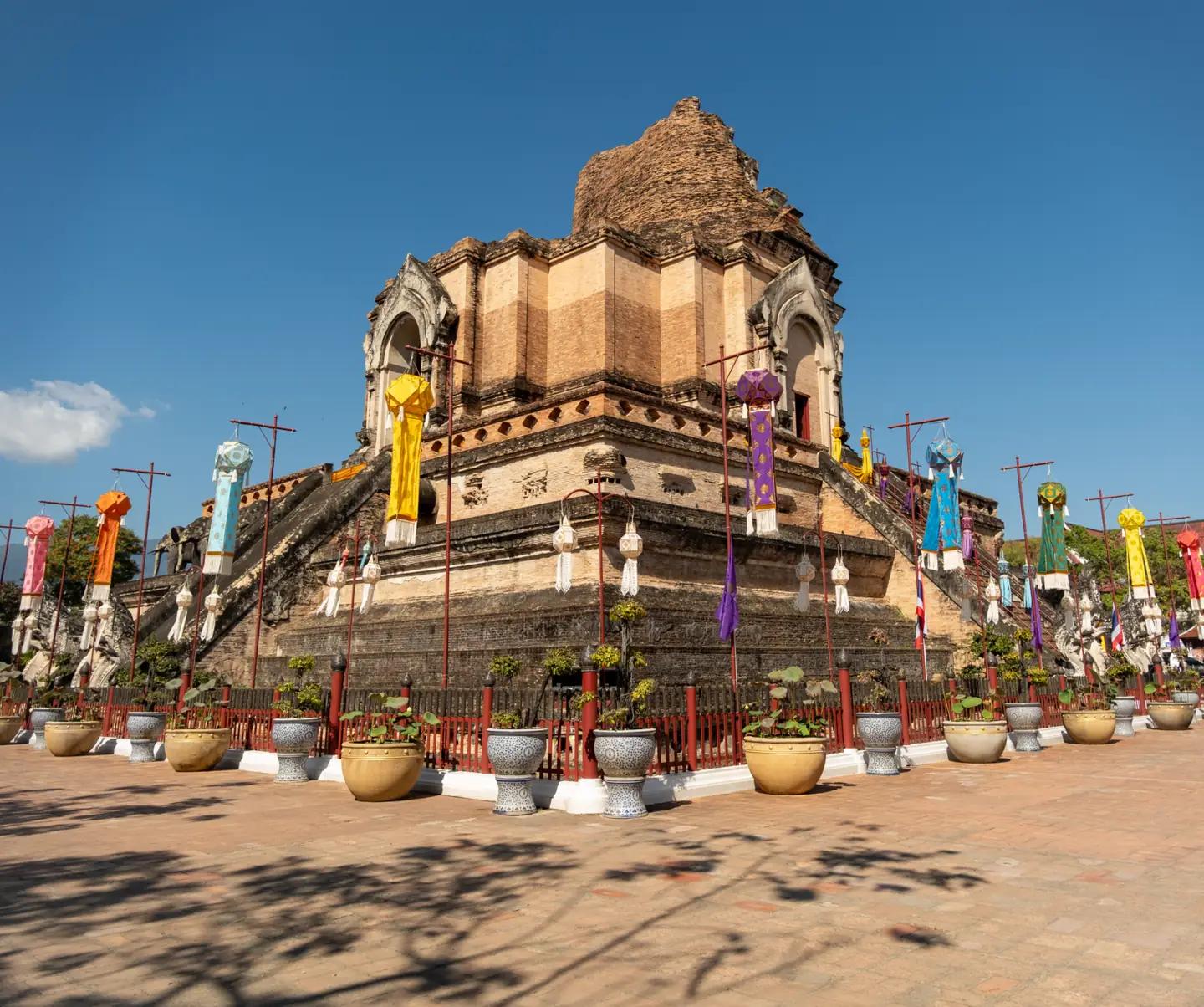
Kunst & Kultur · Wat Chedi Luang, Chiang Mai
Cover your shoulders and knees at temples, remove your shoes where indicated and speak quietly. Monks may not touch or be touched by women, and some temples have areas that are off-limits.
KapitelMarkets and walking streets
Chiang Mai's markets are central to its rhythm. The Sunday Walking Street along Ratchadamnoen Road fills with crafts, food and music, and the smaller Saturday Walking Street on Wualai Road has a more local feel. Warorot Market, by the river, is the place for everyday goods and northern Thai snacks. The Night Bazaar, nearer the river, is a long-established souvenir area.
Shopping · Sunday Walking Street, Chiang Mai
KapitelNorthern Thai food
Northern Thai cuisine is distinct from the rest of the country. Khao soi, a rich coconut curry noodle soup topped with crispy noodles, is the signature dish. Sai ua, a spiced northern sausage, nam prik ong, a tomato and pork dip, and gaeng hang lay, a Burmese-influenced pork curry, are other highlights. A cooking class, usually starting with a market visit, is a great way to learn the flavors. The Nimmanhaemin district is known for its stylish cafés and restaurants.
KapitelDoi Suthep and the mountains
Wat Phra That Doi Suthep, a gilded temple on a mountain above the city, is the most famous sight. Reach it by a long staircase flanked by naga serpents or by a short funicular, and enjoy the view on a clear day. Doi Inthanon National Park, the highest mountain in Thailand, offers waterfalls, cool forest air and Karen villages, and is best seen on a full-day trip.
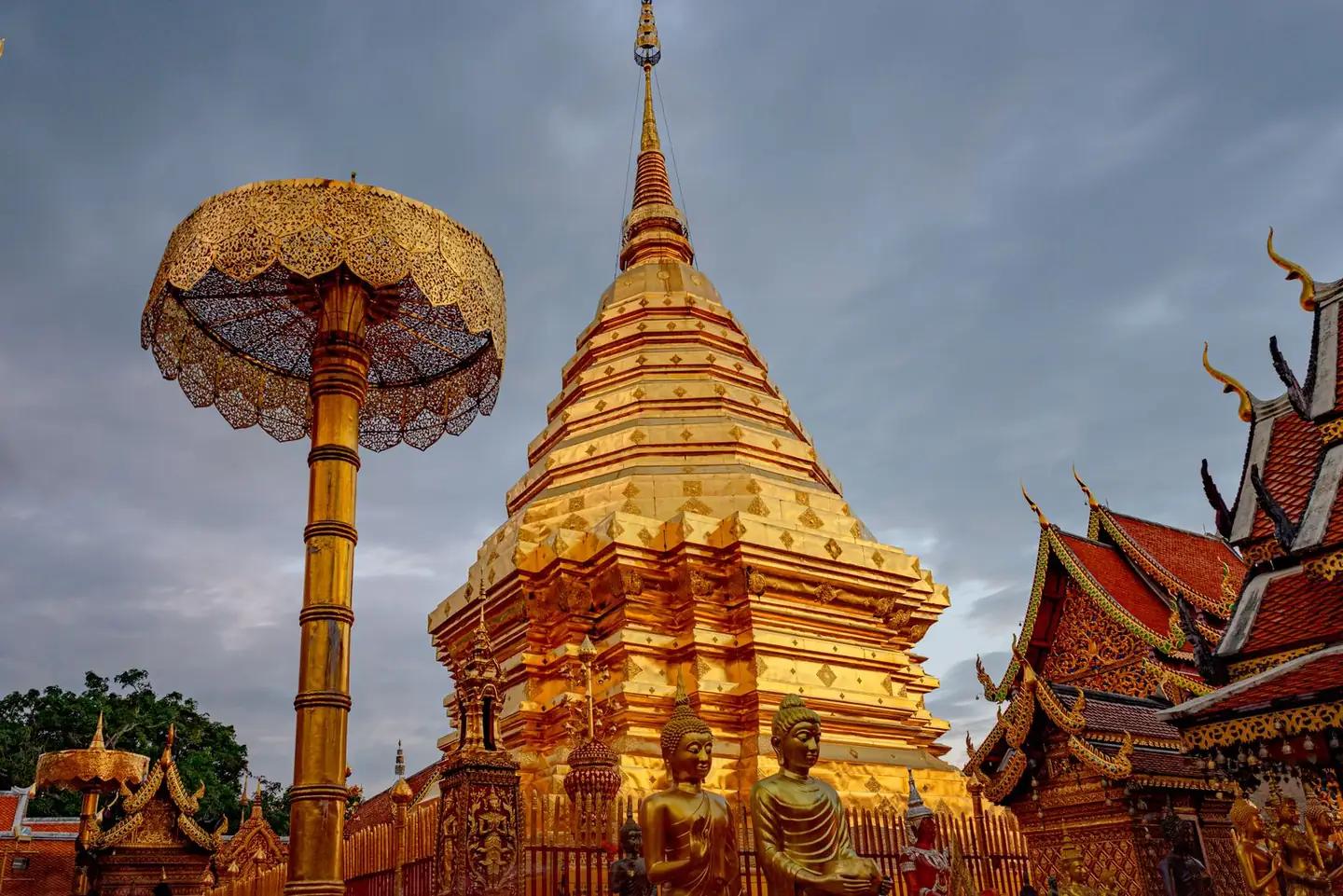
Kunst & Kultur · Wat Phra That Doi Suthep, Chiang Mai
KapitelChoose elephant experiences carefully
Chiang Mai is known for elephant tourism, and the welfare of the animals varies dramatically. Riding, bathing shows and performances often involve harmful treatment. Look for sanctuaries that focus on observation, do not offer rides or shows and provide good care, and read independent reviews before booking.
KapitelFestivals
Yi Peng and Loy Krathong, in November, are among the most beautiful festivals in Thailand, when thousands of lanterns rise into the sky and decorated floats are set on the water. Songkran, the Thai New Year in April, is a joyful, soaking water festival. Both draw crowds and require advance accommodation booking.
KapitelBeyond the city
Chiang Rai, three hours north, is known for the White Temple and the Blue Temple, and can be done as a long day trip or an overnight. Pai, a mountain town in a valley, is a popular backpacker stop, reached by a winding road with hundreds of curves, so motion-sickness tablets may help.
KapitelWhen to go
The cool, dry season, from November to February, is the most comfortable and lively. From about February to April, the burning season brings smoke and haze, and air quality can be poor, so check conditions if you have respiratory concerns. The rainy season, from May to October, brings green landscapes and fewer visitors.
Check current details: Tourism Authority of Thailand.


