Chefchaouen is small, and that is its great advantage. You can cross the medina on foot in minutes, yet an unhurried visit fills a couple of days without effort. The famous blue-washed lanes are the draw, but the town makes more sense as a pause in the Rif Mountains than as a place to photograph and leave.
KapitelWalk the medina without a plan
Begin at Plaza Uta el-Hammam, the central square beside the old kasbah, and let the lanes carry you. Most of the pleasure is in details: a blue doorway with a potted geranium, steps painted a deeper shade, a weaver's stall tucked beside a stairway. The kasbah, with its small museum and garden, and the octagonal minaret of the Grand Mosque help you orient yourself.
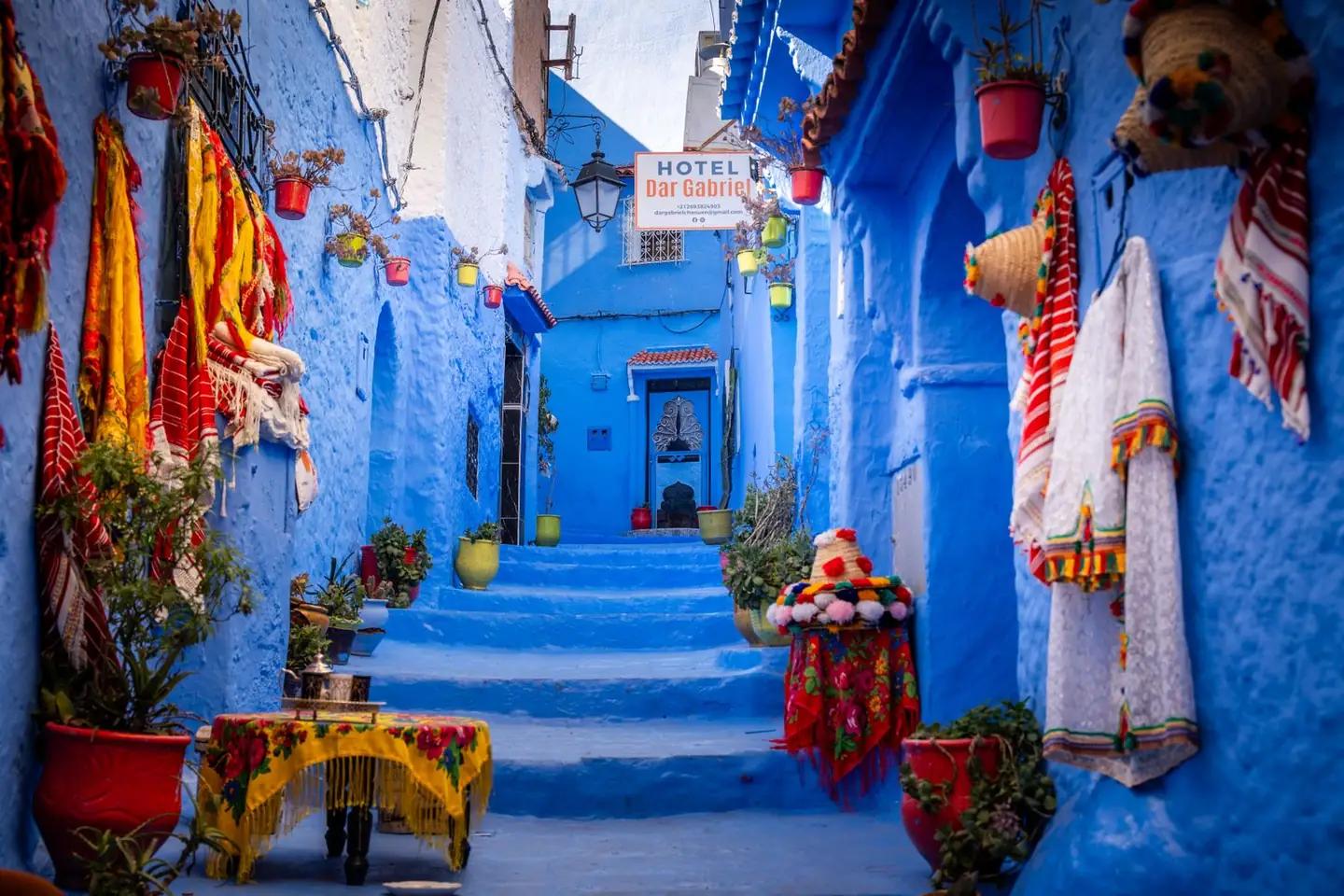
Sehenswürdigkeiten & Touren · Blue Medina of Chefchaouen, Chefchaouen
Go early and late. In the morning, before the day-trip groups arrive, the lanes are quiet and the light is soft. In the evening, when the crowds thin again, the town returns to something like its everyday self.
KapitelBe a considerate visitor
People live in these lanes, and homes and doorways are not stage sets. Ask before photographing residents, avoid blocking narrow steps for photographs and treat shopkeepers as people rather than backdrops. Dress modestly, as in most of Morocco, and be polite but firm if you are offered services you do not want.
You may be offered hashish in the streets, since the Rif region is known for cannabis cultivation. It is illegal, and the simplest answer is a friendly, firm refusal.
KapitelLook up and out
Climb to the Spanish Mosque on the hill above the town, a short walk that rewards you with a wide view over the blue rooftops, particularly at sunset. Down by the medina's edge, Ras el-Maa, where a spring rushes out of the hillside, is a gathering place with cafés and local life.
Draußen aktiv · Ras El Maa, Chefchaouen
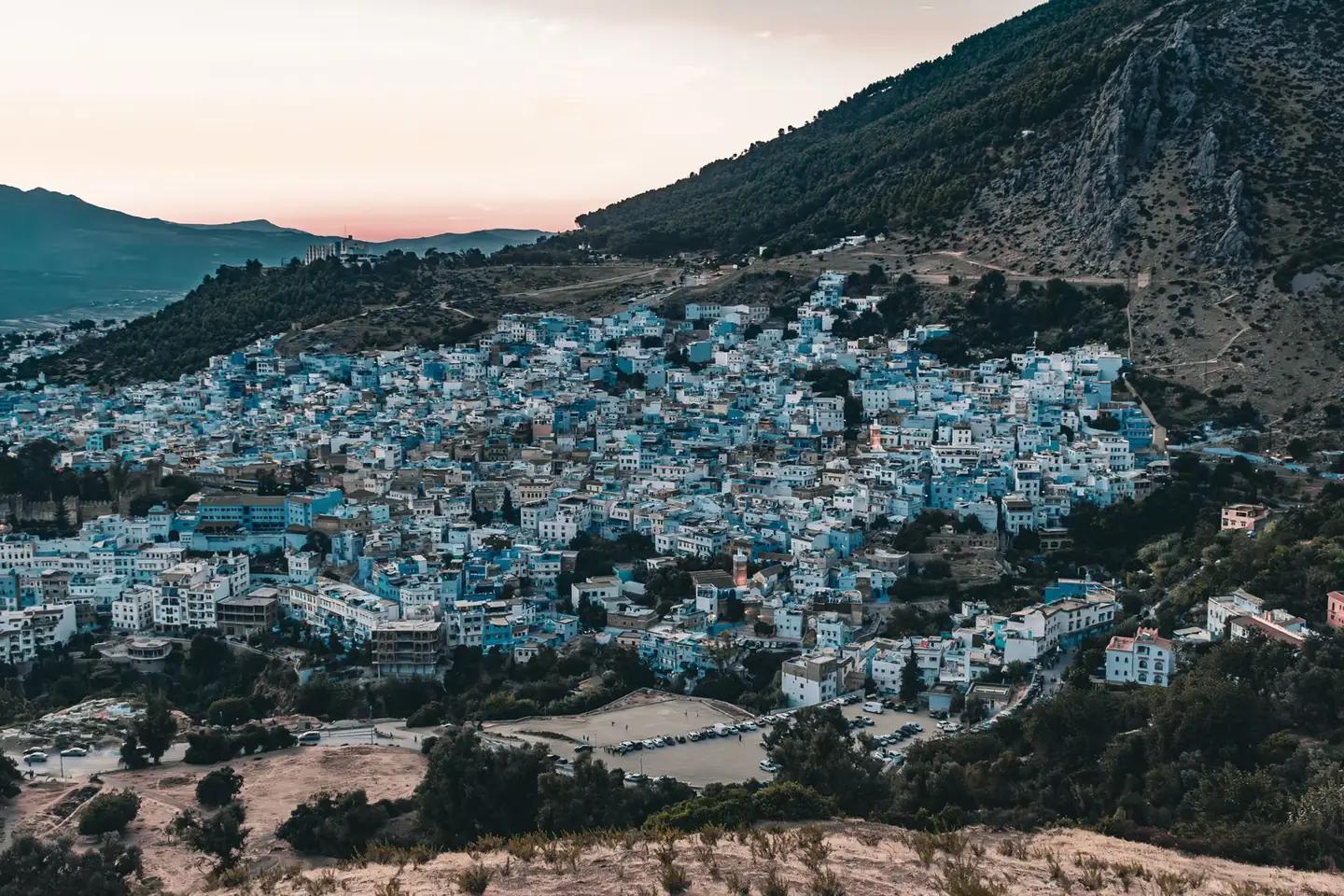
Draußen aktiv · Spanish Mosque viewpoint, Chefchaouen
If you have a second day, make it a hiking day. Akchour, within Talassemtane National Park, has waterfalls, a river valley and the God's Bridge rock arch, reached by a walk that suits a range of fitness levels. Check current conditions and transport before you go, and bring water, sturdy shoes and sun protection.
KapitelWhat to eat
Moroccan breakfast here is a pleasure: bread, olive oil, local honey, soft cheese and sweet mint tea. Chefchaouen is known for its goat cheese, and you will find it on many menus. Look for harira, the tomato and lentil soup, tagines slow-cooked in clay pots and bissara, a warm fava bean soup that suits a cold morning. Rooftop terraces are an excellent place for an unhurried lunch with a view.
KapitelShopping with patience
Local crafts include woven blankets, wool garments and leather goods. Compare before you buy, ask the price politely and treat bargaining as a friendly conversation rather than a contest. Buy something small from someone whose work you like.
KapitelGetting there and moving on
Chefchaouen is usually reached by bus or shared taxi from Tangier, Tetouan or Fès, or by private transfer. The journey takes a few hours, so arrive with daylight to spare. The medina's stepped streets are tough on rolling suitcases, so pack light and wear comfortable shoes.
KapitelWhen to go
Spring and autumn offer pleasant weather for walking. Summer can be hot, though the mountain location keeps evenings cooler than the coast. Winter brings cool, rainy days and fewer visitors, and the town takes on a quieter feel.
Check current details: Moroccan National Tourist Office.


