Florence is compact enough to walk in a day and deep enough to fill a week. The Renaissance began here, and its legacy is everywhere: in the dome over the skyline, the paintings in the Uffizi, the sculptures in the squares and the workshops across the river. The risk is overload. The best way to see Florence is a little at a time, with breaks that let the art settle.
KapitelBook the big museums
The Uffizi Gallery, home to Botticelli's Birth of Venus, and the Accademia, with Michelangelo's David, are two of the most visited museums in Italy. Reserve timed tickets through the official channels, and choose the first or last slots to avoid peak crowds. The Duomo complex, including the cathedral, the Baptistery, Giotto's bell tower and Brunelleschi's dome, uses a combined ticket, and climbing the dome requires a reserved time.
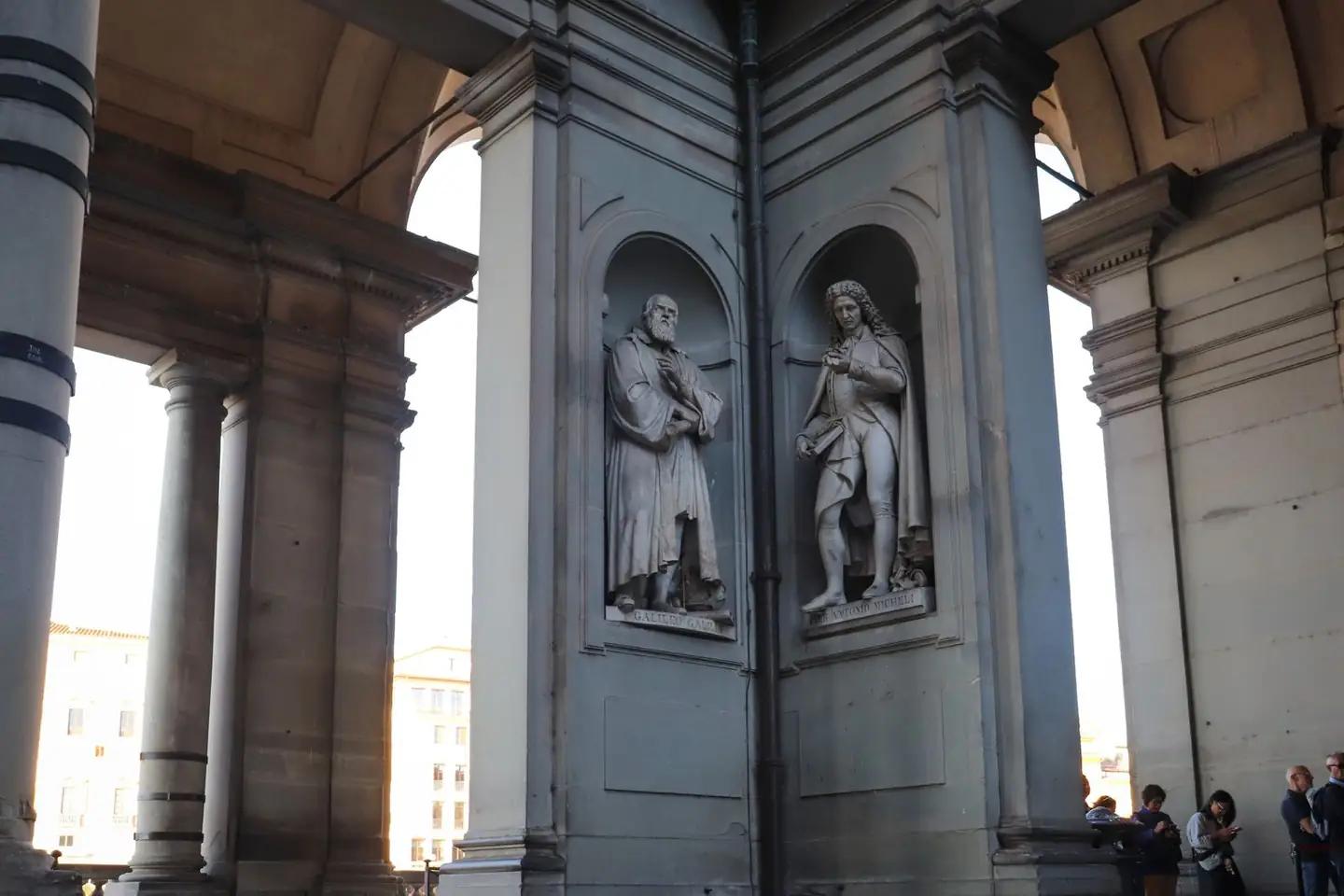
Kunst & Kultur · Uffizi Gallery, Florence
Do not try to do everything. One major museum a day, balanced with churches, gardens or a long lunch, is a better pace than three.
KapitelThe center on foot
Start at the Duomo and walk to Piazza della Signoria, an open-air gallery of sculptures in front of the Palazzo Vecchio. The Ponte Vecchio, the medieval bridge lined with jewelry shops, is crowded but unmissable. Santa Croce, with tombs of Michelangelo and Galileo, and the Bargello, a sculpture museum with fewer crowds than the Uffizi, are both excellent.
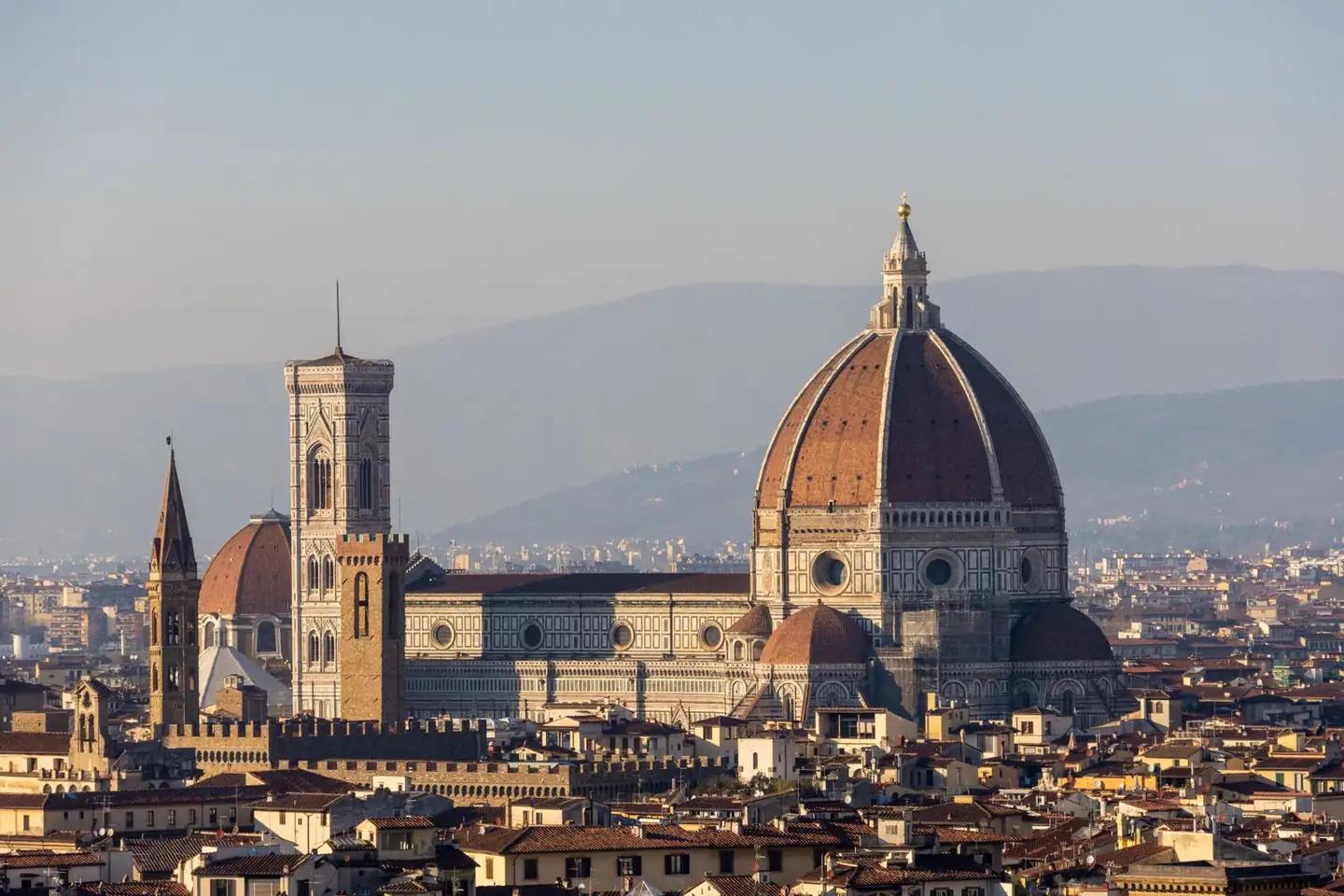
Sehenswürdigkeiten & Touren · Florence Cathedral and Brunelleschi's Dome, Florence
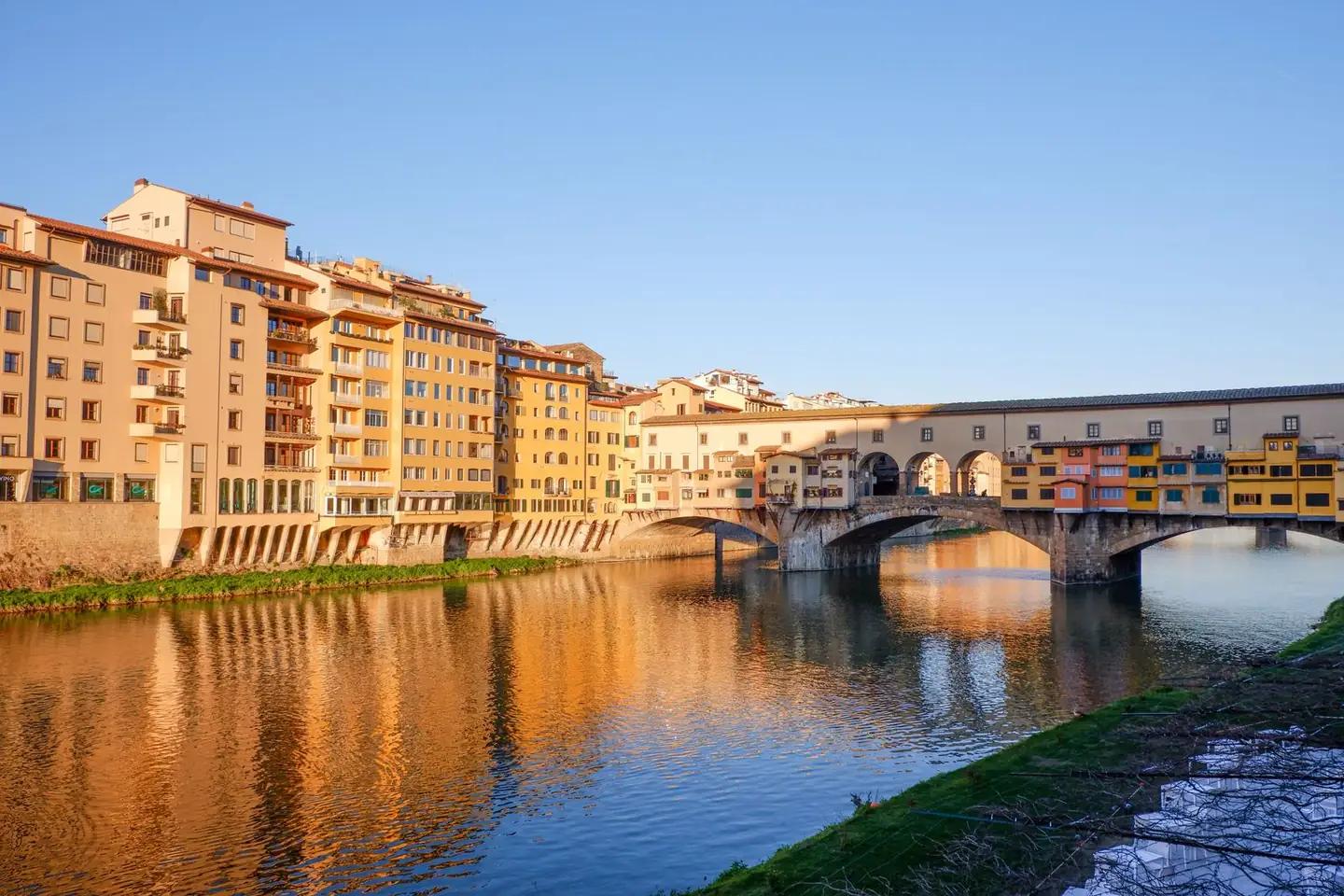
Sehenswürdigkeiten & Touren · Ponte Vecchio, Florence
The Medici Chapels and the San Lorenzo market, with leather stalls outside and the Mercato Centrale food hall inside, are worth a visit.
KapitelCross the Arno
The Oltrarno, the district south of the river, is where Florence still makes things. Artisan workshops produce leather goods, paper, jewelry and furniture, and the Piazza Santo Spirito is a lively local square with cafés and a small market. The Pitti Palace and the Boboli Gardens provide a shady retreat from the heat.
For the best view of the city, climb to Piazzale Michelangelo at sunset, then continue up to the church of San Miniato al Monte, one of the most beautiful Romanesque churches in Italy. Monks sometimes sing Gregorian chant in the evening.
KapitelWhat to eat
Bistecca alla fiorentina, a thick T-bone steak grilled rare over charcoal, is the signature dish, and is sold by weight and shared. Ribollita, a hearty bread and vegetable soup, and pappa al pomodoro, a thick tomato and bread soup, are classic Tuscan comfort food. Lampredotto, a tripe sandwich sold from street carts, is the adventurous local snack. For a lighter meal, try schiacciata, Tuscan flatbread, filled with cured meats and cheese.
In the evening, an aperitivo, a drink with small snacks, is a pleasant ritual. Tuscan wines, especially Chianti, are the natural accompaniment.
KapitelDay trips
The Tuscan countryside is the reason for a day or two outside the city. Siena, with its shell-shaped square, and San Gimignano, with its medieval towers, are popular. Pisa and Lucca, a walled city you can circle on its ramparts, are an easy train ride away. A winery visit in the Chianti hills makes a lovely day, but arrange transport so you are not driving after tasting.
KapitelPractical notes
Florence's historic center is closed to most vehicles, so rental cars are best collected on the way out of the city. Pickpockets operate in crowded areas, so keep valuables secure. Many churches expect modest dress.
KapitelWhen to go
Spring and autumn are ideal, with warm days and comfortable walking. Summer is hot and crowded, and August can be very quiet as many locals leave. Winter is cool and uncrowded, a good time for museums.
Check current details: Firenze Turismo.


